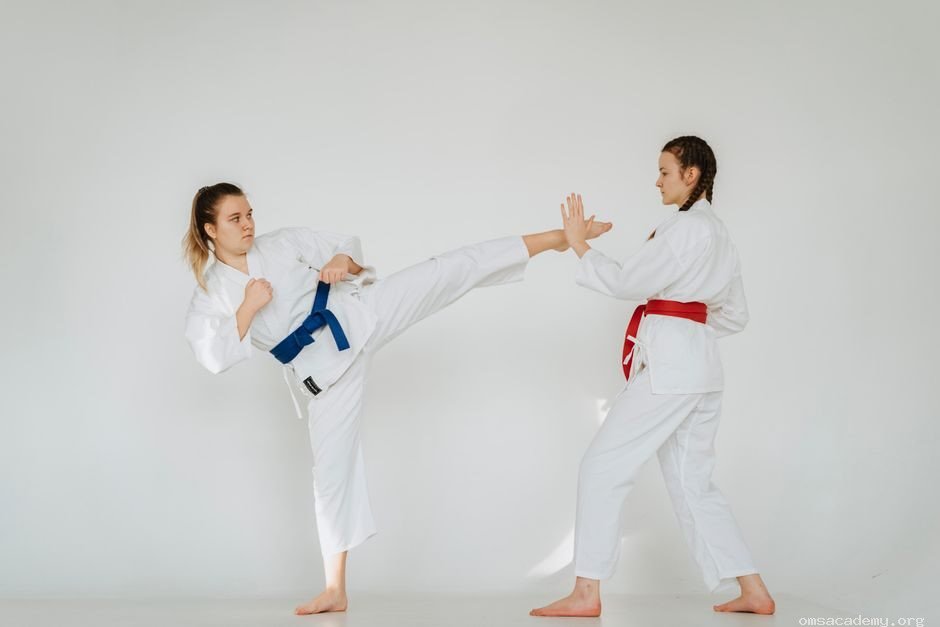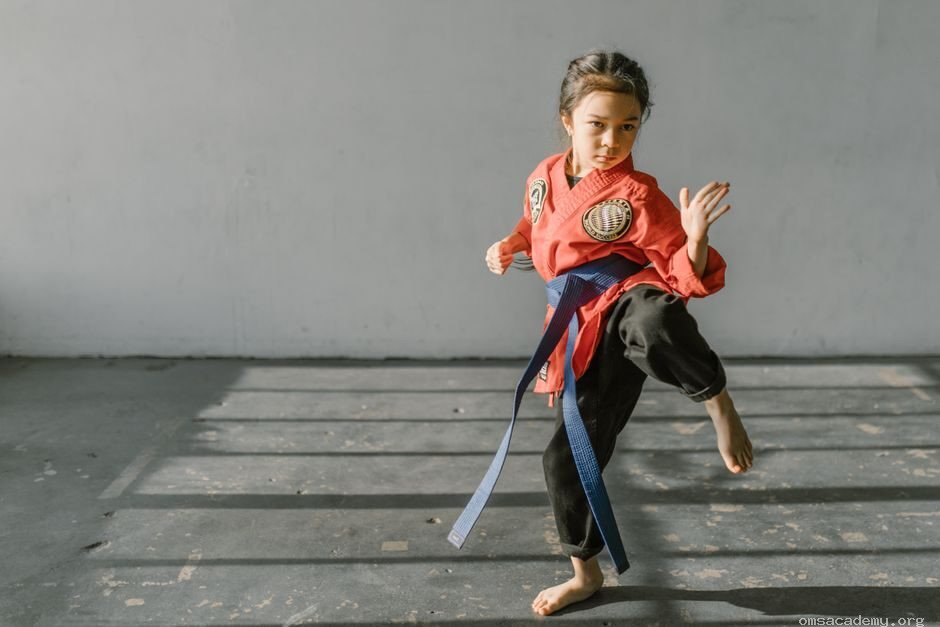

Taekwondo emphasizes kicking as its defining feature, used for scoring, demonstrations, and belt advancement. Effective technique relies on a four-phase structure involving chambering, extension, impact, and re-chambering. Students progress through a technical pyramid, starting with basic linear kicks before moving to complex spinning and aerial maneuvers.
Mastering these techniques requires a combination of flexibility, core strength, and support-leg stability. Training involves progressive drills ranging from slow-motion practice to high-intensity pad work. Consistent focus on striking surfaces and hip rotation ensures maximum power and precision as students advance from beginner levels to black belt mastery.
Why Kicks Are the Heart of Taekwondo
If Taekwondo had a single defining feature, it would be the kick. No other martial art devotes as much training time, technical depth, and competitive emphasis to kicking as Taekwondo.
In WT Olympic sparring, kicks score the majority of points. In poomsae, kicks demonstrate power, balance, and control. In belt examinations, kick quality is the single most assessed criterion. And in demonstration, kicks are what make audiences gasp.
At Om’s Martial Arts & Fitness Studio, kicking technique is developed progressively across the belt system. You do not attempt a spinning hook kick at white belt. You master the front kick first. Then the roundhouse. Then the side kick. Each kick builds on the last, creating a technical pyramid that supports increasingly advanced techniques.
This guide covers every major Taekwondo kick, organized by belt level, with step-by-step execution, common mistakes, and training tips.
[↑ Back to: The Complete Guide to Taekwondo]
The Anatomy of Every Kick
Before diving into individual kicks, understand that every Taekwondo kick follows the same four-phase structure:
| Phase | What Happens | Why It Matters |
|---|---|---|
| 1. Chamber | Knee lifts, leg folds into preparation position | Stores energy, hides the kick’s direction, protects the knee |
| 2. Extension | Leg unfolds toward the target | Delivers power and speed |
| 3. Impact | Striking surface contacts the target | Determines effectiveness (ball of foot, instep, heel, blade) |
| 4. Re-chamber / Recovery | Leg folds back, returns to stance | Prevents being caught, maintains balance, enables combinations |
The most common beginner mistake is skipping the chamber. A kick thrown without chambering is slow, telegraphed, weak, and dangerous to your own knee. Always chamber. Always re-chamber.
Striking Surfaces
| Surface | Korean | Used For |
|---|---|---|
| Ball of the foot (ap kumchi) | 앞금치 | Front kick, side kick |
| Instep (bal deung) | 발등 | Roundhouse kick |
| Heel (dwi kumchi) | 뒤금치 | Back kick, axe kick, spinning kicks |
| Blade of the foot (bal nal) | 발날 | Side kick (traditional) |
| Sole (bal badak) | 발바닥 | Push kick, axe kick (downward) |
White Belt Kicks (10th Geup)
1. Front Kick (앞차기 – Ap Chagi)
The first kick every Taekwondo student learns. It is the foundation of all linear kicking.
Target: Midsection (body) or face (advanced)
Striking surface: Ball of the foot (ap kumchi)
Stance: Walking stance (Ap Seogi) or fighting stance
Step-by-Step Execution:
- Start in walking stance, hands in guard position
- Chamber: Lift the rear knee straight up toward your chest. Foot flexed, toes pulled back. Knee points at the target.
- Extend: Snap the lower leg forward, striking with the ball of the foot. Toes pulled up and back (to avoid injury).
- Impact: Hip pushes forward at the moment of contact. Exhale sharply (“Kihap!”).
- Re-chamber: Pull the lower leg back to the chamber position (do not drop the leg straight down).
- Recover: Place the foot forward into walking stance or back into fighting stance.
Common Mistakes:
| Mistake | Correction |
|---|---|
| Striking with the toes (not ball of foot) | Flex toes upward. Practice on a wall slowly. |
| No chamber (leg swings from the ground) | Drill: hold the chamber position for 5 seconds before extending. |
| Leaning backward | Keep chest over hips. Engage core. |
| Dropping the leg after impact (no re-chamber) | Drill: kick → hold chamber → slowly place down. |
| Knee not pointing at target | Chamber higher. Knee is the “aiming sight.” |
| No hip push | At extension, push the hip of the kicking leg forward. |
Training Tips:
- Practice slow-motion front kicks holding a wall for balance. 10 reps per leg.
- Use a target pad at midsection height. Focus on the “snap” sound.
- Strengthen the hip flexors: seated leg lifts, hanging knee raises.
- Stretch hip flexors and hamstrings daily.
Yellow Belt Kicks (8th Geup)
2. Roundhouse Kick (돌려차기 – Dollyo Chagi)
The most frequently used kick in Taekwondo sparring. It is fast, versatile, and scores points at all three levels (body, head, spinning variation).
Target: Ribs, torso, head
Striking surface: Instep (bal deung) or ball of foot
Stance: Fighting stance
Step-by-Step Execution:
- Start in fighting stance (left foot forward for orthodox)
- Pivot: Rotate the front (support) foot 180° on the ball of the foot, turning the heel toward the target. This opens the hip.
- Chamber: Lift the rear knee diagonally across the body. Knee points toward the target. Lower leg folded.
- Extend: Snap the lower leg outward in an arc, striking with the instep. The leg travels in a horizontal arc (not a straight line).
- Impact: Hip rotation drives power. Exhale / kihap.
- Re-chamber: Fold the leg back immediately.
- Recover: Return to fighting stance.
Common Mistakes:
| Mistake | Correction |
|---|---|
| Not pivoting the support foot | Drill: practice the pivot alone, 20 reps. The heel must face the target. |
| Kicking in a straight line (like a front kick) | The roundhouse travels in an arc. Think “around,” not “through.” |
| Dropping the hands during the kick | Keep guard up. One hand protects the face, the other chambers. |
| No hip rotation | The power comes from the hip turn, not the leg swing. |
| Kicking with the toes | Use the instep (top of foot). Point toes slightly down. |
| Over-rotating (spinning out) | Control the re-chamber. Do not let momentum spin you. |
Training Tips:
- Pivot drill: Without kicking, practice the support-foot pivot + hip turn. 30 reps per side.
- Slow-motion roundhouse: Hold a wall. Execute the kick in 5 seconds. Feel every phase.
- Pad work: Partner holds a target pad at rib height. Focus on the “crack” sound of the instep.
- Hip flexibility: Pigeon pose, 90/90 stretch, and hip CARs daily.
Green Belt Kicks (6th Geup)
3. Side Kick (옆차기 – Yeop Chagi)
The most powerful linear kick in Taekwondo. It uses the entire body’s mass behind a single-point strike.
Target: Ribs, knee, midsection
Striking surface: Blade of the foot (bal nal) or heel (dwi kumchi)
Stance: Side-facing (body turns 90° to target)
Step-by-Step Execution:
- Start in fighting stance
- Turn: Rotate your body 90° away from the target. Chamber the rear knee across the body, foot flexed, blade of foot facing the target.
- Chamber: Knee is high, tight to the chest. Lower leg folded. You are now side-on to the target.
- Extend: Drive the foot straight out to the target in a linear thrust. The leg extends like a piston.
- Impact: Heel or blade of foot contacts the target. Hip pushes forward. Exhale / kihap.
- Re-chamber: Pull the leg back to chamber.
- Recover: Turn back to fighting stance.
Common Mistakes:
| Mistake | Correction |
|---|---|
| Not turning the body (facing forward) | You must be side-on. Drill: practice the 90° turn separately. |
| Kicking in an arc (like a roundhouse) | Side kick is linear. Think “push,” not “swing.” |
| Looking at the ground | Keep eyes on the target over the shoulder. |
| Leaning too far back | Slight lean is okay for reach, but core must stay engaged. |
| Striking with the arch (not blade/heel) | Flex the foot. Strike with the outer edge or heel. |
Training Tips:
- Wall drill: Stand side-on to a wall. Chamber. Extend slowly. Hold for 5 seconds. 10 reps per leg.
- Chair drill: Place a chair at rib height. Practice side kick to the chair back (control, no full power).
- Hip abductor strength: Side-lying leg raises, banded lateral walks.
4. Back Kick (뒤차기 – Dwit Chagi)
A devastating counter-attack kick. It uses the heel in a straight-line thrust delivered while turning away from the target.
Target: Midsection, solar plexus
Striking surface: Heel (dwi kumchi)
Stance: Any (delivered by turning)
Step-by-Step Execution:
- Start in fighting stance
- Turn: Rotate your body 180° away from the target, looking over your shoulder to spot the target.
- Chamber: As you turn, lift the rear knee across the body. Foot flexed, heel facing the target.
- Extend: Drive the heel straight back into the target in a linear thrust.
- Impact: Heel contacts the target. Hip drives forward. Exhale / kihap.
- Re-chamber: Fold the leg back.
- Recover: Complete the turn to face the target in fighting stance.
Common Mistakes:
| Mistake | Correction |
|---|---|
| Not looking at the target before kicking | Spot first, then kick. Turn the head before the body. |
| Kicking in an arc (spinning) | Back kick is linear. The heel goes straight back, not around. |
| Raising the leg too high (losing balance) | Keep the kick at midsection height until balance is mastered. |
| Dropping the guard | Keep hands up throughout the turn. |
Training Tips:
- Spot drill: Turn 180°, spot a target on the wall, hold. Do not kick. 20 reps. Build the habit of looking first.
- Slow-motion back kick: 5-second execution. Focus on the linear thrust.
- Partner drill: Partner calls “turn!” — you spot and kick the pad. Builds reaction + technique.
Blue Belt Kicks (4th Geup)
5. Axe Kick (내려차기 – Naeryo Chagi)
A dramatic downward kick that strikes over the opponent’s guard, targeting the head, collarbone, or chest.
Target: Head, collarbone, chest (over the guard)
Striking surface: Heel (dwi kumchi) or sole (bal badak)
Stance: Fighting stance
Step-by-Step Execution:
- Start in fighting stance
- Chamber: Lift the rear leg straight up in front of you, knee high, leg as vertical as possible.
- Extend: Drive the leg upward and slightly forward, reaching maximum height.
- Impact: Pull the leg straight down with force, striking with the heel or sole on the target.
- Recovery: Control the descent. Do not crash down. Return to stance.
Common Mistakes:
| Mistake | Correction |
|---|---|
| Bending the knee during the downward phase | Keep the leg straight (or nearly straight) on the descent. |
| Not lifting high enough | Flexibility is key. Stretch hamstrings and hip flexors daily. |
| Losing balance on the support leg | Strengthen the support leg. Hold a wall during practice. |
| Dropping the hands | Keep guard up. The axe kick leaves you vulnerable if missed. |
Training Tips:
- Flexibility first: Standing hamstring stretch, front splits practice, wall leg holds.
- Slow-motion axe kick: Lift → hold at max height (3 sec) → slow descent. 10 reps per leg.
- Target practice: Hold a pad above head height. Strike downward with control.
6. Spinning Hook Kick (뒤후려차기 – Dwit Huryeo Chagi)
One of the most spectacular and devastating kicks in Taekwondo. It combines a 360° spin with a hooking heel strike to the head.
Target: Head (jaw, temple)
Striking surface: Heel (dwi kumchi)
Stance: Fighting stance
Step-by-Step Execution:
- Start in fighting stance
- Turn: Rotate your body 360° toward the target. Spot the target over your shoulder early.
- Chamber: As you complete the turn, lift the kicking leg with the knee bent.
- Extend: Unfold the leg in a hooking arc, striking with the heel.
- Impact: Heel contacts the side of the head. The leg travels in a circular path (not linear).
- Recovery: Follow through with controlled rotation. Return to stance.
Common Mistakes:
| Mistake | Correction |
|---|---|
| Losing sight of the target during the spin | Spot early. Turn the head before the body. |
| Kicking in a straight line (like a back kick) | The hook kick travels in an arc. The heel “hooks” around. |
| Off-balance after the spin | Core engagement. Slow practice. Strengthen the support leg. |
| Telegraphing the spin | Do not “wind up.” The turn should be quick and compact. |
Training Tips:
- Spot drill: 360° turn → spot → hold. No kick. 30 reps. Build the spotting habit.
- Slow-motion hook kick: 8-second execution. Feel the arc.
- Pad work: Partner holds a pad at head height. Focus on the “hook” path.
- Balance: Single-leg stands, bosu ball work.
Red Belt Kicks (2nd Geup)
7. Tornado Kick (나래차기 – Narae Chagi)
A jumping, spinning kick that combines a 360° rotation with a roundhouse or hook kick delivered in the air.
Target: Head
Striking surface: Instep or heel
Stance: Any (delivered from a jump)
Step-by-Step Execution:
- Start in fighting stance
- Turn: Begin a 360° rotation, spotting the target.
- Jump: As you complete the turn, jump off the support leg, lifting the kicking leg.
- Strike: Execute a roundhouse or hook kick in the air at the peak of the jump.
- Land: Land on the kicking leg (or both feet) in a controlled stance.
Common Mistakes:
| Mistake | Correction |
|---|---|
| Jumping too early (before the turn) | Complete the turn first, then jump. Drill the turn separately. |
| Losing sight of the target | Spot early and often. |
| Landing off-balance | Core engagement. Practice landing in stance. |
| Insufficient height | Build explosive leg power: jump squats, box jumps. |
8. Jump Front Kick (뛰어앞차기 – Twio Ap Chagi)
A front kick delivered in the air, adding the power of a jump to the linear thrust.
Target: Head, chest (over guard)
Striking surface: Ball of the foot
Stance: Any (delivered from a jump)
Step-by-Step:
- Approach or stand in fighting stance
- Jump off both feet (or lead foot)
- At the peak of the jump, chamber and extend a front kick
- Strike with the ball of the foot
- Land in fighting stance
9. Jump Side Kick (뛰어옆차기 – Twio Yeop Chagi)
A side kick delivered in the air. One of the most powerful jumping techniques.
Target: Chest, head
Striking surface: Blade of foot / heel
Step-by-Step:
- Jump off the support leg
- Turn 90° in the air (side-on to target)
- Chamber and extend the side kick at peak height
- Strike with the blade or heel
- Land controlled
Black Belt Kicks (1st Dan+)
10. 540° Kick
A 1.5-rotation spinning kick (540 degrees of rotation) ending with a roundhouse or hook kick. Requires exceptional balance, spatial awareness, and explosive power.
11. Butterfly Kick (나비차기 – Nabi Chagi)
An aerial, acrobatic kick where the body goes horizontal in the air with both legs sweeping in a circular motion. Primarily used in demonstration and tricking, not competition.
12. Combination Kicks
At black belt level, the focus shifts from individual kicks to fluid combinations:
- Roundhouse → Roundhouse (double)
- Front kick → Roundhouse → Spinning hook
- Low roundhouse → High roundhouse (level change)
- Axe kick → Spinning back kick
- Jump front kick → Landing → Tornado kick
[→ Full Library: 50 Taekwondo Kick Combinations – White to Black Belt]
Kick Progression by Belt – Summary Table
| Belt | Kicks Learned | Key Focus |
|---|---|---|
| ⬜ White | Front Kick (Ap Chagi) | Chamber, extension, ball of foot |
| 🟡 Yellow | Roundhouse Kick (Dollyo Chagi) | Pivot, hip rotation, instep |
| 🟢 Green | Side Kick (Yeop Chagi), Back Kick (Dwit Chagi) | Body turn, linear thrust, spotting |
| 🔵 Blue | Axe Kick (Naeryo Chagi), Spinning Hook Kick | Flexibility, spin control, heel strike |
| 🔴 Red | Tornado Kick, Jump Kicks, 540° intro | Explosive power, aerial control |
| ⬛ Black | All kicks + combinations + creative application | Speed, precision, adaptability |
How to Improve Your Kicking (General Tips)
1. Flexibility Is Non-Negotiable
- Daily stretching: Hamstrings, hip flexors, adductors, calves
- PNF stretching: 2-3× per week for rapid gains
- Yoga: At Om’s, Power Yoga classes directly support kicking height
2. Strengthen the Support Leg
- Single-leg squats, lunges, calf raises
- The support leg bears your entire body weight during a kick
3. Core Strength = Kick Power
- Every kick rotates through the core
- Planks, Russian twists, hanging leg raises, hollow body holds
4. Drill Slow Before Fast
- Slow-motion kicks build correct neural pathways
- Speed without form = injury + bad habits
5. Use Targets
- Pads, bags, and shields give feedback on accuracy and power
- At Om’s, every class includes pad work
6. Film Yourself
- Record your kicks on video
- Compare with reference footage
- Self-assessment accelerates improvement
[→ Related: How to Increase Your Kicking Height – A 12-Week Flexibility Program]
[→ Related: Yoga for Martial Artists – Flexibility and Balance]
Frequently Asked Questions
Q: Which kick should I learn first?
A: The Front Kick (Ap Chagi). It is the foundation of all linear kicking and the first kick taught at white belt at Om’s Martial Arts & Fitness Studio.
Q: How long until I can do a spinning kick?
A: Spinning kicks (hook kick, back kick) are typically introduced at blue belt (~9-12 months). Tornado and jump kicks come at red belt (~12-18 months). Rushing leads to injury.
Q: Why does my roundhouse kick feel weak?
A: The most common cause is insufficient hip rotation and support-foot pivot. The power comes from the hip turn, not the leg swing. Drill the pivot separately.
Q: How do I kick higher?
A: Flexibility + strength + technique. Stretch daily (hamstrings, hip flexors, adductors). Strengthen the hip flexors and core. Practice slow, controlled high kicks. At Om’s, our Power Yoga classes accelerate flexibility gains.
Q: Is it normal for my hips to hurt when learning kicks?
A: Mild muscle soreness is normal. Sharp joint pain is not. If you feel sharp pain in the hip joint, knee, or groin, stop and consult your coach. You may be forcing range of motion beyond your current flexibility.
[→ Full FAQ: 500+ Taekwondo Questions Answered]
Practice Your Kicks at Om’s
Reading about kicks is useful. Doing them under expert supervision is transformative.
At Om’s Martial Arts & Fitness Studio, every class includes dedicated kicking drills — slow technique work, pad work, combination practice, and progressive sparring application.
[→ Book Your Free Trial Class at Om’s Martial Arts & Fitness Studio]
[→ Read the Complete Guide to Taekwondo]
[→ Next: Every Taekwondo Block – Step-by-Step]
Om’s Martial Arts & Fitness Studio – One kick at a time. Precision. Power. Progress.