The Complete Guide to Taekwondo: Everything You Need to Know From White Belt to Black Belt

Taekwondo is a Korean martial art and Olympic combat sport emphasizing high kicks, hand strikes, and mental discipline. It evolved from ancient traditions and unified various schools into modern styles like World Taekwondo. Practitioners follow five core tenets, including courtesy and integrity, to build physical strength and moral character.

Training involves mastering stances, blocks, and dynamic kicking techniques alongside structured forms called poomsae. Students progress through a color belt system toward black belt status. Beyond physical fitness and self-defense, the discipline offers a competitive pathway to national and international tournaments, fostering focus and perseverance across all age groups.

Written by the coaching team at Om’s Martial Arts & Fitness Studio, with over 32+ years of combined experience in Taekwondo instruction, national-level competition, and student development.


What Is Taekwondo?

Taekwondo (태권도) is a Korean martial art and Olympic combat sport that translates literally to “the way of the foot and fist.” It is one of the most widely practiced martial arts in the world, with over 80 million practitioners across 210 countries, and has been an official Olympic sport since the Sydney 2000 Games.

At its core, Taekwondo is a striking art that emphasizes:

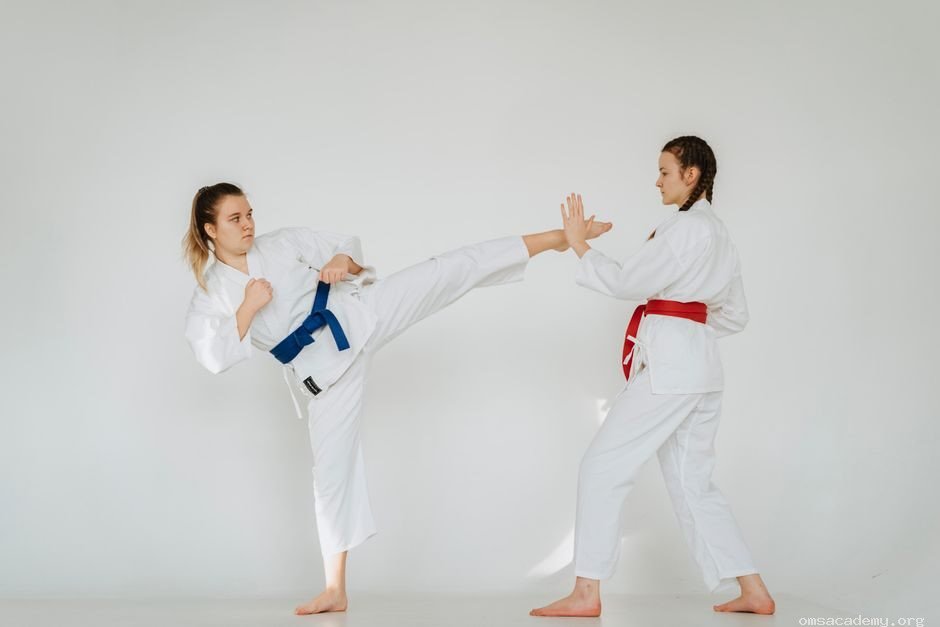
  • High, fast kicks (head-height and spinning techniques)
  • Precise hand strikes (punches, knife-hand strikes, elbow techniques)
  • Dynamic footwork and distance management
  • Mental discipline, respect, and character development

Unlike grappling arts such as Brazilian Jiu-Jitsu or wrestling, Taekwondo is predominantly a stand-up striking discipline, making it one of the most visually spectacular martial arts in competition.

At Om’s Martial Arts & Fitness Studio, Taekwondo is our flagship program. We train students from age 5 through adulthood, from absolute beginners to national-level competitors, following the structured curriculum recognized by World Taekwondo (WT) and the Taekwondo Federation of India (TFI).

“Taekwondo is not just about kicking. It is about building a person — body, mind, and character.”
— Philosophy we teach at Om’s Martial Arts & Fitness Studio

[→ Related: What Is Taekwondo? A Beginner’s Introduction]
[→ Related: Taekwondo vs Karate – Which Is Right for You?]


A Brief History of Taekwondo

Understanding where Taekwondo comes from helps you appreciate why it is structured the way it is today.

Ancient Origins (57 BC – 935 AD)

The roots of Taekwondo trace back to the Three Kingdoms period of Korea — Goguryeo, Baekje, and Silla. Murals found in the Goguryeo tombs (dating to approximately 37 BC–668 AD) depict figures in fighting stances that closely resemble modern Taekwondo techniques.

The Hwarang Warriors of the Silla Kingdom were an elite group of young noblemen trained in a combat system called Subak and a broader educational philosophy called Hwarang-do, which emphasized:

  • Loyalty to the nation
  • Respect for parents and teachers
  • Courage in battle
  • Justice and moral conduct

These values directly mirror the five tenets of modern Taekwondo.

[→ Deep Dive: Ancient Korea and the Origins of Taekwondo]
[→ Deep Dive: The Hwarang Warriors – Korea’s Elite Fighting Class]

Japanese Occupation and Suppression (1910–1945)

During the Japanese occupation of Korea, indigenous martial arts were banned. Korean practitioners secretly continued training, and many traveled to Japan and China to study Karate and Kung Fu, bringing those influences back.

This period is critical because it explains why early Taekwondo shares visible similarities with Japanese Karate — particularly in early forms (hyung/poomsae) and terminology.

Birth of Modern Taekwondo (1945–1966)

After Korea’s liberation in 1945, several martial arts schools called kwans opened across Seoul. The five original kwans were:

  1. Chung Do Kwan
  2. Song Moo Kwan
  3. Moo Duk Kwan
  4. Chang Moo Kwan
  5. Jidokwan

In 1955, a naming committee unified these schools under the single name “Taekwondo.” The driving force behind this unification was General Choi Hong Hi, a Korean Army general who is widely regarded as the founder of modern Taekwondo.

General Choi also developed the first systematic curriculum, the 24 patterns (tul), and established the International Taekwondo Federation (ITF) in 1966.

[→ Deep Dive: General Choi Hong Hi – The Father of Taekwondo]
[→ Deep Dive: The Five Original Kwans Explained]

ITF, WT, and the Olympic Journey (1966–Present)

A political split in 1973 led to the creation of the World Taekwondo Federation (now simply World Taekwondo / WT), headquartered in Seoul, South Korea. WT became the governing body recognized by the International Olympic Committee (IOC).

Key milestones:

YearMilestone
1973World Taekwondo Federation founded; 1st World Championships held
1980IOC recognition granted
1988Demonstration sport at Seoul Olympics
1992Demonstration sport at Barcelona Olympics
2000Official Olympic sport at Sydney Games
2024Paris Olympics – new format with best-of-3 rounds
2028Confirmed for Los Angeles Olympics

Today, two major styles exist:

  • ITF Taekwondo – More traditional, semi-contact sparring, sine wave movement
  • WT Taekwondo – Olympic style, full-contact sparring with electronic scoring, sport-focused

At Om’s Martial Arts & Fitness Studio, we follow the WT (World Taekwondo) curriculum, which is the pathway recognized for national and international competition in India through the Taekwondo Federation of India (TFI).

[→ Deep Dive: ITF vs WT Taekwondo – Complete Comparison]
[→ Deep Dive: Taekwondo’s Olympic Journey – 2000 to 2028]


The Five Tenets of Taekwondo

Every student at Om’s Martial Arts & Fitness Studio learns these five tenets from day one. They are not decorative posters on a wall — they are the behavioral framework of training.

1. Courtesy (예의 – Ye Ui)

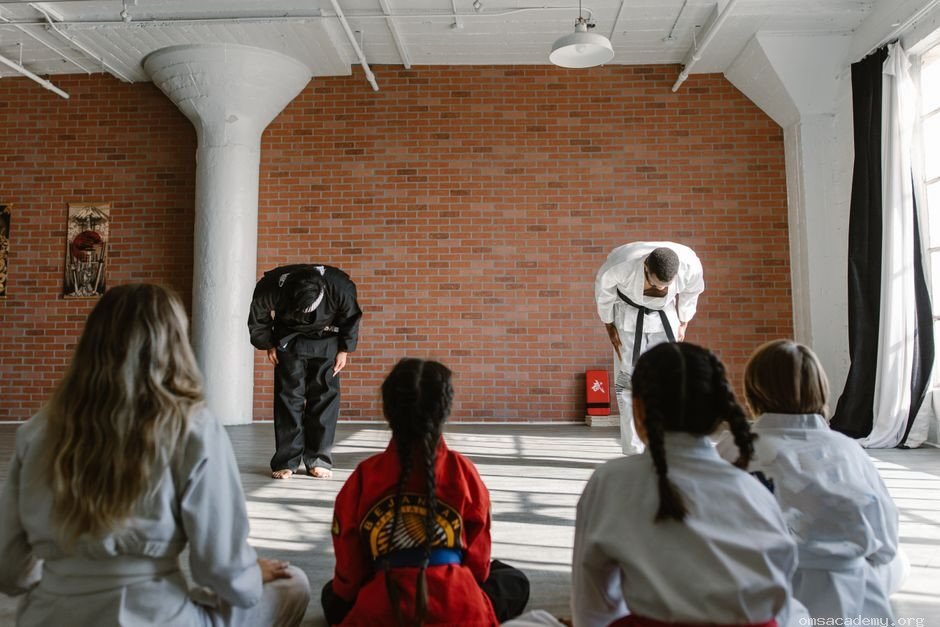
Showing respect to instructors, fellow students, opponents, and yourself. Bowing when entering and leaving the dojang. Addressing seniors properly.

2. Integrity (염치 – Yom Chi)

Honesty in training. Not cutting corners. Acknowledging your mistakes. Knowing the difference between right and wrong.

3. Perseverance (인내 – In Nae)

Continuing despite difficulty. A white belt who keeps showing up will eventually become a black belt. Progress is not linear.

4. Self-Control (극기 – Geuk Gi)

Managing your emotions, your power, and your reactions. In sparring, control separates a martial artist from a brawler.

5. Indomitable Spirit (백절불굴 – Baekjul Boolgool)

The courage to stand up for what is right, even when facing overwhelming odds. The mental refusal to quit.

[→ Deep Dive: The Five Tenets of Taekwondo – How We Apply Them at Om’s]
[→ Deep Dive: Martial Arts Philosophy – Building Character Through Training]


Taekwondo Techniques – An Overview

Taekwondo’s technical curriculum is vast. At Om’s Martial Arts & Fitness Studio, students progressively learn techniques across these categories:

Stances (서기 – Seogi)

The foundation of every technique. Without proper stance, power and balance are impossible.

StanceKorean NamePurpose
Attention StanceCharyeot SeogiFormal greeting, readiness
Ready StanceJunbi SeogiPreparation for forms/sparring
Walking StanceAp SeogiForward movement, basic attacks
Front StanceAp KubiLong-range power techniques
Back StanceDwit KubiDefensive positioning, counter-attacks
Horse Riding StanceJuchum SeogiLeg strength, side techniques
Tiger StanceBeom SeogiQuick forward attacks
Crane StanceHakdari SeogiBalance, single-leg kicks

[→ Full Library: Complete Guide to Taekwondo Stances (With Images)]

Blocks (막기 – Makgi)

Defensive techniques used to redirect or stop incoming attacks:

  • Low Block (Arae Makgi)
  • Middle Block (Momtong Makgi)
  • High Block (Olgul Makgi)
  • Knife-Hand Block (Sonnal Makgi)
  • Double Forearm Block (Sang Pal Makgi)
  • X-Block (Gawi Makgi)
  • Palm Block (Batangson Makgi)

[→ Full Library: Every Taekwondo Block Explained Step-by-Step]

Hand Strikes (지르기 / 치기)

  • Front Punch (Momtong Jireugi)
  • Reverse Punch (Bandae Jireugi)
  • Knife-Hand Strike (Sonnal Chigi)
  • Ridge-Hand Strike (Deung Jumeok Chigi)
  • Backfist Strike (Deung Jumeok Chigi)
  • Elbow Strike (Palkup Chigi)
  • Hammer Fist (Me Jumeok Chigi)

[→ Full Library: Complete Taekwondo Hand Techniques Guide]

Kicks (차기 – Chagi)

This is where Taekwondo truly distinguishes itself. The kicking arsenal includes:

Basic Kicks:

  • Front Kick (Ap Chagi)
  • Roundhouse Kick (Dollyo Chagi)
  • Side Kick (Yeop Chagi)
  • Back Kick (Dwit Chagi)
  • Axe Kick (Naeryo Chagi)

Advanced Kicks:

  • Spinning Hook Kick (Dwit Huryeo Chagi)
  • Spinning Back Kick (Dwit Chagi with rotation)
  • Tornado Kick (Narae Chagi)
  • Jump Front Kick (Twio Ap Chagi)
  • Jump Side Kick (Twio Yeop Chagi)
  • 540° Kick
  • Butterfly Kick (Nabi Chagi)

At Om’s Martial Arts & Fitness Studio, kicking technique is developed progressively. Beginners start with front kick and roundhouse kick. Spinning and jumping techniques are introduced only after the student demonstrates adequate balance, hip flexibility, and core strength — typically around green belt level and above.

[→ Full Library: All Taekwondo Kicks – From White Belt to Black Belt]
[→ Related: How to Improve Your Kicking Height – Flexibility Guide]

Poomsae (품새 – Forms)

Poomsae are pre-arranged sequences of techniques performed against imaginary opponents. They are the Taekwondo equivalent of Karate’s kata.

WT Recognized Poomsae:

LevelPoomsaeMeaning
8th GeupTaegeuk Il JangHeaven / Beginning
7th GeupTaegeuk Ee JangLake / Joy
6th GeupTaegeuk Sam JangFire / Passion
5th GeupTaegeuk Sa JangThunder / Power
4th GeupTaegeuk Oh JangWind / Flexibility
3rd GeupTaegeuk Yuk JangWater / Adaptability
2nd GeupTaegeuk Chil JangMountain / Stillness
1st GeupTaegeuk Pal JangEarth / Completion
Black BeltKoryo, Keumgang, Taebaek, Pyongwon, Sipjin, Jitae, Cheonkwon, Hansu, IlyeoAdvanced philosophical concepts

Poomsae is also a competition discipline at the World Championships and Olympics (introduced as a demonstration/discipline category).

[→ Full Library: Complete Taegeuk Poomsae Guide – All 8 Forms]
[→ Related: Poomsae Competition Rules 2026]

Sparring (겨루기 – Gyeorugi)

Olympic-style sparring (WT format) is a full-contact, point-based combat sport fought on an octagonal mat. Key features:

  • 3 rounds × 2 minutes (senior division)
  • Electronic scoring via PSS (Protector and Scoring System) — sensors in chest guards and foot protectors register valid strikes
  • Points: Punch to body = 1, Body kick = 2, Head kick = 3, Spinning body kick = 4, Spinning head kick = 5
  • Weight categories for fair competition
  • Protective gear: Head guard, chest protector (hogu), forearm guards, shin guards, groin guard, mouthguard, gloves

[→ Full Library: Taekwondo Sparring – Complete Technique & Strategy Guide]
[→ Related: Taekwondo Sparring Rules 2026 – WT Official]

Breaking (격파 – Gyeokpa)

Demonstration of power, precision, and focus. Breaking boards, tiles, or bricks using:

  • Hand techniques (punch, knife-hand, elbow)
  • Foot techniques (front kick, side kick, roundhouse, axe kick)
  • Jumping and spinning variations
  • Speed breaking vs. power breaking

Breaking is a demonstration and testing component, not a competition format in WT, but it is central to belt promotions at Om’s Martial Arts & Fitness Studio.

[→ Related: Taekwondo Breaking – Techniques, Tips & Safety]


The Taekwondo Belt System

The belt (띠 – tti) system represents a student’s progressive journey. At Om’s Martial Arts & Fitness Studio, we follow the WT-standard geup/dan system:

Color Belt Progression (Geup Levels)

Belt ColorGeupTypical TimelineFocus
⬜ White10th GeupStarting pointBasic stances, front kick, basic blocks
🟡 Yellow8th Geup~3 monthsRoundhouse kick, Taegeuk 1-2, combinations
🟢 Green6th Geup~6 monthsSide kick, back kick, Taegeuk 3-4, sparring intro
🔵 Blue4th Geup~9-12 monthsSpinning kicks, Taegeuk 5-6, sparring development
🔴 Red2nd Geup~12-18 monthsAdvanced combinations, Taegeuk 7-8, competition prep
⬛ Black (1st Dan)1st Dan~2-3 yearsPoomsae mastery, advanced sparring, teaching basics

Black Belt Dan Progression

DanTitleMinimum AgeFocus
1st–3rd DanInstructor (Boosabeom)16+Technical mastery, assistant teaching
4th–6th DanMaster (Sabeom)25+Curriculum development, referee qualification
7th–9th DanGrandmaster (Sahyun)40+Philosophy, governance, legacy

At Om’s Martial Arts & Fitness Studio, belt promotions happen every 3 months for color belts and require demonstration of techniques, poomsae, sparring ability, breaking, and theory/viva.

[→ Full Guide: Taekwondo Belt System – Complete Requirements for Every Belt]
[→ Related: How Long Does It Take to Get a Black Belt in Taekwondo?]


Taekwondo Rules – Competition Format (2026 WT Rules)

Understanding the rules is essential for competitors, parents, and coaches.

Match Format (Senior Division – 2026)

  • Best of 3 rounds
  • Each round: 2 minutes with 1 minute rest
  • If tied after 2 rounds won each → Golden Round (first to score wins)
  • Octagonal competition area: 8m × 8m

Scoring System

TechniquePoints
Punch to trunk protector1
Kick to trunk protector2
Kick to head3
Spinning kick to trunk4
Spinning kick to head5
Gam-jeom (penalty) against opponent+1 to you

Penalties (Gam-jeom)

  • Grabbing or holding the opponent
  • Falling down deliberately
  • Avoiding combat (passivity)
  • Kicking below the waist
  • Attacking after “Kal-yeo” (break command)
  • Unsportsmanlike conduct

Weight Categories (Senior – 2026 Olympics)

Men: -58kg, -68kg, -80kg, +80kg
Women: -49kg, -57kg, -67kg, +67kg

[→ Full Guide: WT Taekwondo Competition Rules 2026 – Complete Breakdown]
[→ Related: Referee Signals in Taekwondo – Visual Guide]


The Olympic & International Competition Pathway

One of the most common questions parents ask at Om’s Martial Arts & Fitness Studio is: “Can my child actually go to the Olympics?”

The answer is yes, and here is the structured pathway in India:

Academy Training (Om's Martial Arts & Fitness Studio)
        ↓
District Championship
        ↓
State Championship (State Taekwondo Association)
        ↓
National Championship (Taekwondo Federation of India)
        ↓
National Camp / Selection Trials
        ↓
International Events (Asian Championships, Grand Prix, World Championships)
        ↓
Olympic Qualification (Continental Qualification / World Ranking)
        ↓
OLYMPIC GAMES

Key Requirements at Each Level

  • District/State: Registration with state association, valid medical certificate, age/weight verification
  • National: Selection through state team or direct entry via ranking
  • International: Indian team selection by TFI, minimum dan certification, anti-doping compliance (NADA/WADA)
  • Olympics: Top 5 in World Ranking OR qualification through Continental Qualification Tournament

Age Categories

CategoryAge Range
Cadet12–14 years
Junior15–17 years
Senior17+ years
ParaClassified by impairment type

[→ Full Guide: How to Become an Olympic Taekwondo Athlete from India]
[→ Related: Taekwondo Federation of India – Registration & Competition Guide]
[→ Related: Khelo India & Government Support for Martial Arts Athletes]


Training at Om’s Martial Arts & Fitness Studio

What Happens in Your First Class

If you have never stepped into a martial arts studio before, here is exactly what to expect at Om’s:

  1. Welcome & Orientation (10 min) – Meet the coach, understand the class structure, get introduced to basic etiquette (bowing, lining up, addressing instructors as “Sabumnim”).
  2. Warm-Up (10-15 min) – Light jogging, dynamic stretches, joint mobility exercises.
  3. Basic Technique (20-25 min) – Your first stance (Charyeot/Attention), first block (Arae Makgi/Low Block), first kick (Ap Chagi/Front Kick).
  4. Conditioning (10 min) – Bodyweight exercises appropriate for your level.
  5. Cool-Down & Stretch (10 min)Static stretching, breathing exercises.
  6. Closing (5 min) – Line up, bow, brief feedback from the coach.

You do NOT need any prior experience. You do NOT need to be fit. You do NOT need to be flexible. Every black belt was once a confused white belt.

Class Structure by Level

LevelFrequencyDurationFocus
Beginners (White-Yellow)3×/week60 minFundamentals, coordination, confidence
Intermediate (Green-Blue)3-4×/week75 minCombinations, sparring intro, poomsae
Advanced (Red-Black)4-5×/week90 minCompetition prep, advanced techniques, leadership
Competition Squad5-6×/week90-120 minSparring strategy, conditioning, tournament simulation

Required Equipment

For your first month, you only need:

  • Comfortable athletic clothing (t-shirt + track pants)
  • Water bottle
  • Bare feet (we train on matted floors)

After enrollment, you will need:

  • Dobok (Taekwondo uniform) – provided/available at Om’s
  • Belt (white to start)
  • Mouthguard (for sparring)
  • Groin guard (male students, for sparring)
  • Forearm/shin guards (for sparring)
  • Head guard + Chest protector (hogu) (for competition training)

[→ Full Guide: Taekwondo Equipment – Complete Buying Guide for Beginners]
[→ Related: Best Taekwondo Uniforms in India – 2026 Comparison]


Who Should Join Taekwondo?

For Kids (Age 5–12)

  • Develops discipline, focus, and listening skills
  • Builds coordination and gross motor skills
  • Teaches anti-bullying confidence (without aggression)
  • Reduces screen dependency through physical engagement
  • Supports ADHD management through structured physical activity

For Teenagers (Age 13–17)

  • Channels energy productively
  • Builds self-esteem during a vulnerable developmental phase
  • Provides a competitive outlet (district/state/national level)
  • Develops goal-setting habits (belt progression)
  • Sports quota benefits for college admissions

For Adults (18+)

  • Full-body fitness (cardio + strength + flexibility)
  • Stress relief and mental clarity
  • Practical self-defence awareness
  • Community and accountability
  • Never too late to start — we have students who began at 40+

For Women

  • Confidence and situational awareness
  • Practical striking techniques for self-defence
  • Fitness in a supportive, non-intimidating environment
  • Community of like-minded individuals

[→ Related: Is Taekwondo Good for Kids? A Parent’s Complete Guide]
[→ Related: Taekwondo for Women – Benefits, Safety & What to Expect]
[→ Related: Can Adults Start Taekwondo? (Yes – Here’s How)]


Taekwondo vs Other Martial Arts

FactorTaekwondoKarateKickboxingMMA
OriginKoreaJapan/OkinawaJapan/Thailand/USAMixed (global)
Primary FocusKicks (70%) + Hands (30%)Balanced strikesPunches + Kicks + ClinchStriking + Grappling + Ground
Olympic Sport✅ Yes✅ Yes (2020 only)❌ No❌ No
Contact LevelFull (WT) / Semi (ITF)Semi/Full (varies)FullFull
Grappling❌ No❌ NoLimited (clinch)✅ Yes
Best ForSpeed, flexibility, sportDiscipline, traditionFitness, combat realismComplete fighting
Kids Friendly✅ Excellent✅ Excellent⚠️ 12+ recommended⚠️ 14+ recommended

There is no “best” martial art. There is only the best martial art for your goals. At Om’s Martial Arts & Fitness Studio, we offer Taekwondo, Kickboxing, MMA, Self-Defence, Power Yoga, and Functional Fitness so you can find your fit.

[→ Related: Taekwondo vs Kickboxing – Which Should You Choose?]
[→ Related: MMA vs Taekwondo – Understanding the Differences]


Health & Fitness Benefits of Taekwondo

Backed by sports science research:

  • Cardiovascular fitness – A 60-minute Taekwondo class burns 500–800 calories (comparable to running at 8 km/h)
  • Flexibility – Regular training increases hip and hamstring flexibility by 20-30% within 6 months
  • Balance & coordination – Single-leg kicking develops proprioception significantly
  • Core strength – Every rotational kick engages the entire core chain
  • Bone density – Impact training supports bone health (especially important for children and women)
  • Mental health – Studies show martial arts training reduces anxiety and improves self-efficacy (referenced in Journal of Sport and Exercise Psychology)
  • Cognitive function – Memorizing poomsae sequences enhances working memory and concentration

[→ Deep Dive: The Science of Taekwondo – Research-Backed Benefits]
[→ Related: Taekwondo for Weight Loss – A Realistic Guide]


Common Myths vs Facts

MythFact
“Taekwondo is only about kicking”Hands, blocks, stances, and mental training are equally emphasized
“You need to be flexible to start”Flexibility is developed through training, not a prerequisite
“It’s dangerous for kids”With proper supervision and protective gear, injury rates are lower than football or basketball
“Adults can’t learn Taekwondo”Adults learn faster cognitively; many earn black belts after 30
“It’s not useful for self-defence”While sport-focused, Taekwondo develops distance management, striking power, and awareness
“You’ll get hurt in sparring”Controlled sparring with full protective gear has a low injury rate; beginners spar only when ready

[→ Related: Top 20 Taekwondo Myths – Debunked]


Frequently Asked Questions

Q: What age can my child start Taekwondo?
A: At Om’s Martial Arts & Fitness Studio, we accept children from age 5. Classes for 5-7 year olds are shorter (45 min) and focus on coordination, listening skills, and fun fundamentals.

Q: How long does it take to get a black belt?
A: With consistent training (3× per week), most students achieve 1st Dan black belt in 2.5 to 3.5 years. This varies based on attendance, dedication, and natural aptitude.

Q: Is Taekwondo safe?
A: Yes. Taekwondo has a lower injury rate than many mainstream sports. At Om’s, we enforce strict safety protocols: mandatory protective gear for sparring, progressive skill introduction, and coach-supervised sessions at all times.

Q: Do I need to be fit before joining?
A: No. Taekwondo builds fitness. Our beginner classes are designed for people with zero athletic background. You will progress at your own pace.

Q: What is the difference between ITF and WT Taekwondo?
A: ITF is more traditional with semi-contact sparring and sine-wave movement. WT is the Olympic style with full-contact sparring and electronic scoring. Om’s follows the WT system.

Q: Can Taekwondo help with my child’s ADHD/focus issues?
A: Many parents report significant improvement in focus, discipline, and self-regulation. The structured environment, clear expectations, and physical exertion are particularly beneficial. However, Taekwondo complements — not replaces — professional medical guidance.

Q: How much does it cost?
A: Please contact Om’s Martial Arts & Fitness Studio directly for current fee structures. We offer monthly, quarterly, and annual plans, as well as sibling discounts.

Q: Will Taekwondo make my child aggressive?
A: No. Taekwondo explicitly teaches self-control, respect, and non-violence. The first tenet is courtesy. Students learn that martial arts skills are for self-defence and self-improvement, never for bullying or showing off.

[→ Full FAQ: 500+ Taekwondo Questions Answered]


Start Your Taekwondo Journey at Om’s Martial Arts & Fitness Studio

Whether you are a parent looking for a disciplined activity for your child, an adult seeking fitness and stress relief, or an aspiring competitor aiming for nationals — your first step is simply walking through our door.

What You Get at Om’s:

✅ WT-aligned structured curriculum
✅ Certified and experienced coaching staff
✅ Age-appropriate batch divisions
✅ Safe, matted training environment
✅ Regular belt promotion examinations
✅ Competition training and tournament participation
✅ Holistic development (physical + mental + character)
✅ Community of supportive students and parents

Book Your Free Trial Class

Experience a full session before you commit. No pressure. No obligation. Just show up in comfortable clothes and see if Taekwondo clicks for you or your child.

[→ Book a Free Trial Class at Om’s Martial Arts & Fitness Studio]

[→ Contact Us / Visit Our Studio]

[→ View Class Timetable & Fees]


Om’s Martial Arts & Fitness Studio – Building champions in body, mind, and character.


Scroll to Top