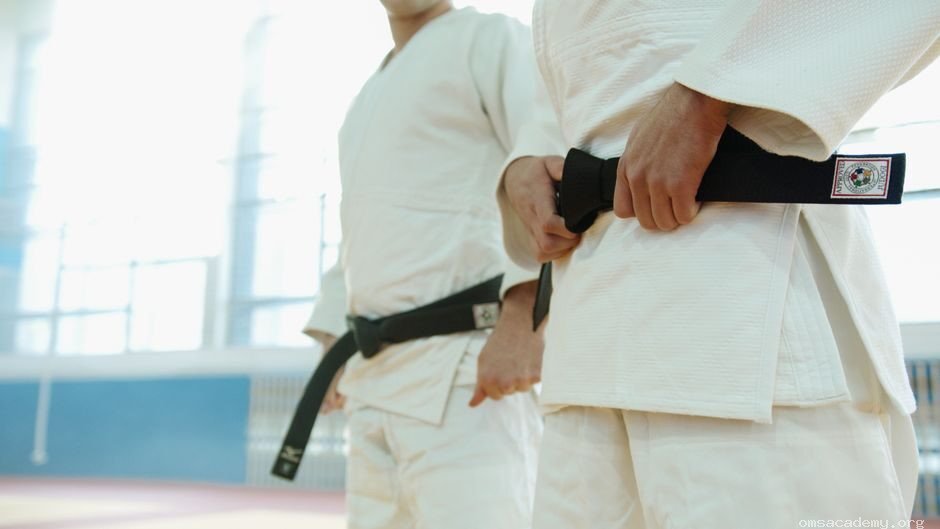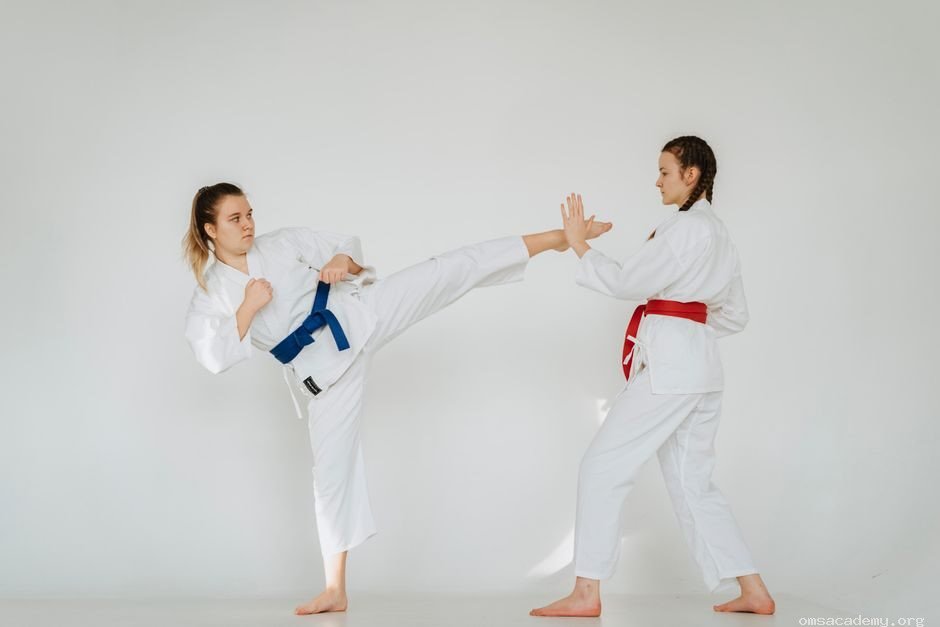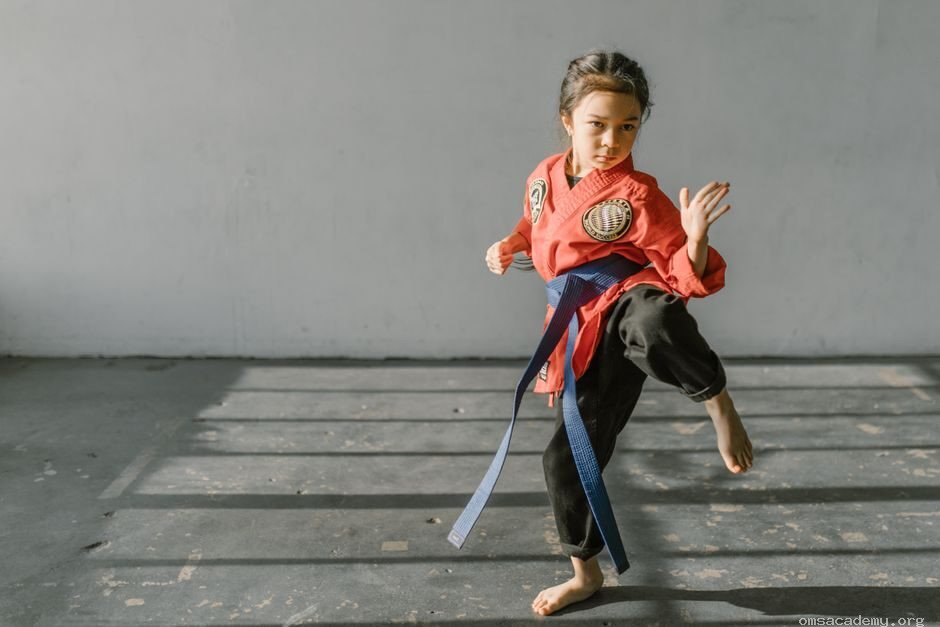

The Taekwondo belt system provides a structured progression for martial artists, marking technical growth and commitment. It categorizes students into color belt levels and advanced black belt ranks. Each level requires mastery of specific techniques, forms, and philosophy, fostering a hierarchy built on mutual respect and consistent training.
Advancement involves periodic examinations covering physical skills, sparring, and theoretical knowledge. Recognized by international federations, this curriculum ensures standardized growth across all ranks. Achieving a black belt represents the mastery of fundamentals and the beginning of advanced study, preparing practitioners for instructor roles and long-term leadership.
Why Does Taekwondo Use Belts?
The belt (띠 – tti) system in Taekwondo is not decorative. It is a visible record of your journey — a progression system that tells you exactly where you are, what you have learned, and what comes next.
The belt system serves three purposes:
- Curriculum structure – Each belt has specific techniques, poomsae, and theory requirements. You don’t guess what to learn next.
- Motivation – A tangible, wearable goal every 3 months keeps students (especially children) engaged and committed.
- Respect hierarchy – Senior belts mentor junior belts. The dojang (training hall) operates on mutual respect between ranks.
At Om’s Martial Arts & Fitness Studio, we follow the World Taekwondo (WT) standard geup/dan system, aligned with the Taekwondo Federation of India (TFI) for recognized certifications.
[↑ Back to: The Complete Guide to Taekwondo]
The Complete Belt Order
Color Belts (Geup Levels)
Taekwondo uses 10 geup levels (counting downward: 10th geup → 1st geup). Most schools, including Om’s, group these into 6 color belts:
| Order | Belt Color | Geup | Symbolism |
|---|---|---|---|
| 1 | ⬜ White | 10th Geup | Innocence. The blank canvas. No prior knowledge. |
| 2 | 🟡 Yellow | 8th Geup | The seed is planted. Foundations are taking root. |
| 3 | 🟢 Green | 6th Geup | The plant is growing. Skills are developing. |
| 4 | 🔵 Blue | 4th Geup | The plant reaches toward the sky. Training matures. |
| 5 | 🔴 Red | 2nd Geup | Danger / caution. The student has power and must learn control. |
| 6 | ⬛ Black | 1st Dan | Maturity. Mastery of fundamentals. The real journey begins. |
Note: Some schools include intermediate stripes (e.g., yellow-green, blue-red). At Om’s, we use the clean 6-belt system with geup testing at each level.
Black Belt Dan Levels
| Dan | Title | Minimum Age | Focus |
|---|---|---|---|
| 1st Dan | Instructor (Boosabeom) | 16+ | Technical mastery, assistant teaching |
| 2nd Dan | Instructor | 18+ | Refined technique, independent teaching |
| 3rd Dan | Instructor | 21+ | Curriculum depth, mentoring |
| 4th Dan | Master (Sabeom) | 25+ | Curriculum development, referee qualification |
| 5th Dan | Master | 30+ | Regional leadership, examination authority |
| 6th Dan | Master | 35+ | National-level contribution |
| 7th Dan | Grandmaster (Sahyun) | 40+ | Philosophy, governance |
| 8th Dan | Grandmaster | 50+ | Legacy, international contribution |
| 9th Dan | Grandmaster | 60+ | Highest honor, lifetime achievement |
Key insight: A 1st Dan black belt is not the end. It is the beginning of true learning. The color belts teach you the alphabet. The black belt teaches you to write the novel.
What Is Required at Each Belt?
⬜ White Belt (10th Geup) – The Beginning
Typical timeline: Starting point (Day 1)
Techniques:
- Attention Stance (Charyeot Seogi)
- Ready Stance (Junbi Seogi)
- Walking Stance (Ap Seogi)
- Low Block (Arae Makgi)
- Front Punch (Momtong Jireugi)
- Front Kick (Ap Chagi)
Poomsae: None (basic line drills)
Theory:
- What does “Taekwondo” mean?
- Dojang etiquette (bowing, lining up, addressing instructors)
- The Five Tenets (introduction)
- Basic Korean terminology (numbers 1-10, commands)
At Om’s: White belt is your first 4-6 weeks. Focus is on stance stability, basic coordination, and learning the class structure. No sparring.
🟡 Yellow Belt (8th Geup) – The Foundation
Typical timeline: ~3 months of consistent training
Techniques:
- Front Stance (Ap Kubi)
- Middle Block (Momtong Makgi)
- High Block (Olgul Makgi)
- Reverse Punch (Bandae Jireugi)
- Roundhouse Kick (Dollyo Chagi)
- Basic combinations (block + punch, punch + kick)
Poomsae:
- Taegeuk Il Jang (Heaven – 18 movements)
- Taegeuk Ee Jang (Lake – 18 movements)
Theory:
- History: Three Kingdoms period (introduction)
- Five Tenets: Courtesy and Integrity (detailed)
- Korean terminology: stances, blocks, kicks
- Counting in Korean (1-30)
Sparring: Introduction to pre-arranged sparring drills (one-step sparring). No free sparring yet.
Breaking: Front kick to a single board (demonstration of technique and commitment).
🟢 Green Belt (6th Geup) – Growth
Typical timeline: ~6 months
Techniques:
- Back Stance (Dwit Kubi)
- Horse Riding Stance (Juchum Seogi)
- Knife-Hand Block (Sonnal Makgi)
- Side Kick (Yeop Chagi)
- Back Kick (Dwit Chagi)
- Multiple kick combinations
- Introduction to sparring stance and footwork
Poomsae:
- Taegeuk Sam Jang (Fire – 20 movements)
- Taegeuk Sa Jang (Thunder – 20 movements)
Theory:
- History: Hwarang Warriors
- Five Tenets: Perseverance
- Sparring rules (introduction)
- Korean terminology: expanded vocabulary
Sparring: Controlled light sparring begins. Full protective gear. Coach-supervised. Focus on distance, timing, and basic attack-defense.
Breaking: Roundhouse kick or side kick to board.
🔵 Blue Belt (4th Geup) – Reaching Higher
Typical timeline: ~9-12 months
Techniques:
- Tiger Stance (Beom Seogi)
- Crane Stance (Hakdari Seogi)
- Double Forearm Block (Sang Pal Makgi)
- Axe Kick (Naeryo Chagi)
- Spinning Hook Kick (Dwit Huryeo Chagi) – introduction
- Jump Front Kick (Twio Ap Chagi)
- Advanced combinations (3-5 technique sequences)
Poomsae:
- Taegeuk Oh Jang (Wind – 20 movements)
- Taegeuk Yuk Jang (Water – 19 movements)
Theory:
- History: Japanese Occupation and the Kwans
- Five Tenets: Self-Control
- Competition format (WT rules introduction)
- Poomsae meanings and philosophy
Sparring: Regular sparring with emphasis on combinations, footwork, and counter-attacks. Introduction to competition-style scoring.
Breaking: Spinning kick or jump kick to board.
🔴 Red Belt (2nd Geup) – Power & Control
Typical timeline: ~12-18 months
Techniques:
- All stances mastered
- All basic and intermediate blocks, punches, kicks
- Tornado Kick (Narae Chagi)
- Jump Side Kick (Twio Yeop Chagi)
- 540° Kick – introduction
- Advanced sparring strategies
- Self-defence applications
Poomsae:
- Taegeuk Chil Jang (Mountain – 25 movements)
- Taegeuk Pal Jang (Earth – 27 movements)
Theory:
- History: General Choi Hong Hi, ITF vs WT
- Five Tenets: Indomitable Spirit
- Complete WT competition rules
- Olympic pathway (India-specific)
- Teaching methodology (introduction)
Sparring: Full competition-style sparring. Tournament preparation. Strategy, ring craft, conditioning.
Breaking: Multiple techniques, power breaking, combination breaking.
⬛ Black Belt – 1st Dan – The Real Beginning
Typical timeline: ~2.5-3.5 years from white belt
Examination requirements (at Om’s / TFI standard):
| Component | Requirement |
|---|---|
| Basic Techniques | All stances, blocks, punches, kicks – performed with precision, power, and correct form |
| Poomsae | All 8 Taegeuk poomsae + Koryo (1st Dan poomsae, 30 movements) |
| Sparring | Full-contact sparring demonstration (multiple rounds, multiple opponents) |
| Breaking | Power breaking (kick + punch) and technique breaking (spinning/jumping) |
| Self-Defence | Demonstration of practical applications against grabs, holds, and attacks |
| Theory / Viva | Complete history, philosophy, Korean terminology, rules, teaching methodology |
| Physical Fitness | Push-ups, sit-ups, flexibility test, endurance run |
The black belt examination at Om’s is a full-day event. It is physically demanding, mentally testing, and deeply rewarding. Family and friends are invited to watch.
“The black belt is not a destination. It is a commitment. A white belt who never quits becomes a black belt. That’s the whole secret.”
— Om’s Martial Arts & Fitness Studio
[→ Related: How Long Does It Take to Get a Black Belt in Taekwondo?]
Promotion Timeline at Om’s
| Belt | Minimum Training | Exam Frequency |
|---|---|---|
| White → Yellow | 3 months | Quarterly |
| Yellow → Green | 3 months | Quarterly |
| Green → Blue | 3 months | Quarterly |
| Blue → Red | 3-6 months | Quarterly |
| Red → Black (1st Dan) | 6-12 months | Bi-annual (TFI schedule) |
| 1st Dan → 2nd Dan | 1-2 years | Annual (TFI) |
| 2nd Dan → 3rd Dan | 2-3 years | Annual (TFI) |
Consistency matters more than speed. A student who trains 3×/week for 3 years will develop deeper skill than one who rushes through belts in 18 months.
Tips for Belt Promotion Success
- Attend consistently. 3×/week minimum. Missed classes = missed repetitions.
- Practice at home. Even 15 minutes of stance work or poomsae review makes a difference.
- Learn the theory. Belt exams include viva. Know your Korean terms, history, and tenets.
- Train your weak side. Most students are dominant on one side. Examiners notice.
- Breathe. Exhale on every technique. Tension kills speed and power.
- Ask questions. Your coaches at Om’s are there to help. If a technique is unclear, ask.
- Rest before the exam. Sleep well the night before. Eat a light meal 2 hours prior. Hydrate.
- Enjoy it. The exam is a celebration of your progress, not a punishment.
[→ Related: How to Prepare for Your Taekwondo Belt Promotion]
Frequently Asked Questions
Q: How many belts are there in Taekwondo?
A: In the WT system followed at Om’s: 6 color belts (White, Yellow, Green, Blue, Red, Black) representing 10 geup levels, followed by 9 dan levels of black belt.
Q: Can I skip a belt?
A: In exceptional cases (prior experience, extraordinary progress), a student may test for a double promotion. This is rare and at the coach’s discretion only.
Q: What happens if I fail a belt exam?
A: You re-test at the next examination cycle (typically 3 months later). Failing is not shameful — it identifies areas to improve. Many successful black belts failed at least one color belt exam.
Q: Do I have to buy a new belt each time?
A: Yes. Each promotion comes with a new belt color. At Om’s, belts are available at the studio.
Q: Is the black belt exam really that hard?
A: It is demanding but achievable for any student who has trained consistently for 2.5-3 years. The exam tests everything you have learned. If you have been paying attention in class, you are already 80% prepared.
Q: Are Om’s belt certifications recognized?
A: Yes. Om’s Martial Arts & Fitness Studio is affiliated with the Taekwondo Federation of India (TFI) and follows the World Taekwondo (WT) curriculum. Black belt (dan) certifications are issued through TFI and are nationally and internationally recognized.
[→ Full FAQ: 500+ Taekwondo Questions Answered]
Begin Your Belt Journey at Om’s
Every belt was once a white belt. Every black belt was once a nervous beginner who decided to show up.
Your white belt is waiting.
[→ Book Your Free Trial Class at Om’s Martial Arts & Fitness Studio]
[→ View Belt Promotion Schedule & Fees]
[→ Read the Complete Guide to Taekwondo]
Om’s Martial Arts & Fitness Studio – One belt at a time. One step at a time. One student at a time.