
Taekwondo Injury Prevention: Safe Training Guide Jaipur
Martial arts offers more than a physical workout; it represents a lifelong commitment to your own durability. Throughout my three decades of coaching at Om’s Martial Arts & Fitness Studio in Jaipur, I have observed a recurring pattern. The most successful practitioners are not the ones who train like frantic machines for a month before burning out. True longevity belongs to the students who show up, train with deliberate intent, and maintain steady progress for years. Many eager beginners push their physical limits without considering the long-term tax on their joints. If you want to keep training into your 50s and beyond, you need a protective strategy and a clear plan to recover from the inevitable bumps in the road. Discipline over motivation—that is how you stay on the mat.
The Biomechanics of Getting Hurt (And How to Stop It)
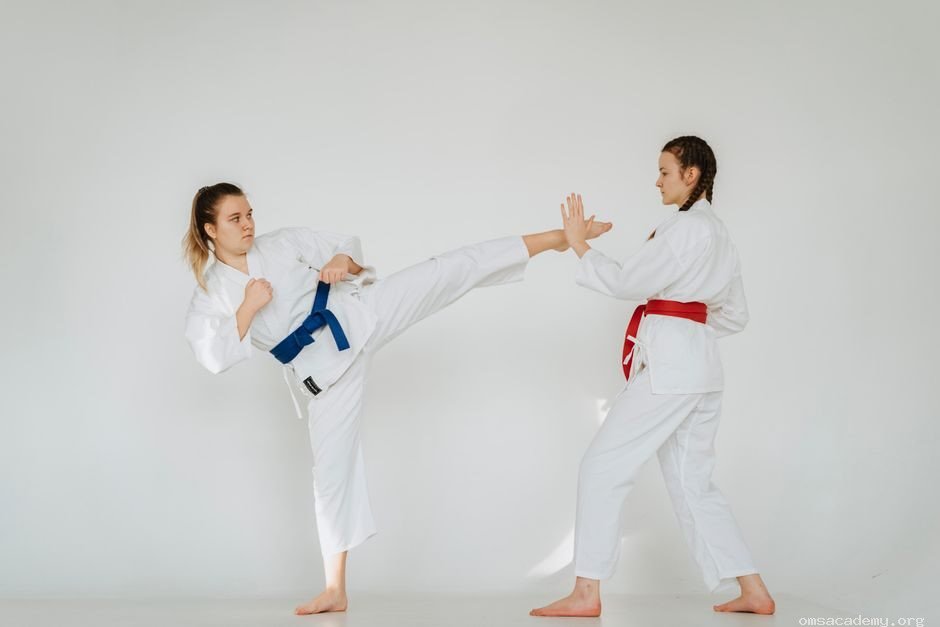
Taekwondo functions on high-velocity levers. When you whip a roundhouse kick into a heavy bag, you generate massive rotational force through your hips, knees, and ankles. If your alignment deviates by even a few degrees, that kinetic energy does not vanish into the target. Instead, it rebounds directly into your connective tissue. In my experience, “freak accidents” are rare. Most injuries represent the final breaking point of bad habits ignored for months or even years. The mat doesn’t lie; if your technique is flawed, your body will eventually tell you.
Consider the structural integrity of your kinetic chain:
- The Ankle: Pivoting is where most ankle issues begin. If your supporting foot fails to rotate fully on the ball of the foot, the ankle joint twists under immense pressure. Landing awkwardly from a jump kick is a common culprit, but the deeper issue is often a lack of foot strength and proprioceptive balance training. Strengthening the tibialis anterior can stabilize the joint significantly.
- The Knee: Your knee functions primarily as a hinge, not a ball-and-socket joint. When your foot stays planted while your hips torque, you place dangerous stress on the meniscus and medial collateral ligaments. Always ensure your foot pivots in harmony with your hip to dissipate force safely.
- The Hip Flexors: These muscles provide the engine for your kicks but are frequently the most neglected. Persistent sitting at desks shortens these fibers, leading to chronic lower back strain. Without consistent mobility work, your back becomes the primary victim of your tight hips, forcing your spine to compensate for limited range.
- The Lower Back: A weak core is the leading cause of lumbar pain. When your abdominal muscles fail to brace during a spinning hook kick, your spine absorbs the rotational whip. That sharp, stabbing pain is your body signaling a failure in your bracing technique rather than a problem with the spine itself.
The Pre-Training Ritual: Waking Up the Nervous System
A cold muscle acts like a brittle rubber band. Walking into the dojo and immediately attempting a head-height target is an invitation to a muscle tear. Your body requires a systematic shift from sedentary desk work to athletic explosiveness. At our Jaipur studio, we prioritize nervous system priming over simple, passive stretching. Think of your warm-up as a calibration of your machine.
| Phase | Purpose | Actionable Drills |
|---|---|---|
| General Warm-up | Raise core temperature and lubricate joints. | Light jogging, skipping rope, or rhythmic shadow boxing. |
| Dynamic Mobility | Full range of motion under control. | Leg swings (forward, lateral, circular), deep lunge twists. |
| Specific Activation | Engage prime movers for peak performance. | Glute bridges, bodyweight squats, and hollow-body planks. |
Avoid static stretching before class. Research consistently shows that holding a deep hamstring stretch for 60 seconds temporarily weakens the muscle and dulls your explosive output. Reserve those long, deep holds for after your session when your muscles are warm and primed for recovery, which helps pull the muscle fibers back to their resting length. Respect is the first belt you earn—respect your body enough to warm it up properly.
Technical Precision: Let Physics Do the Heavy Lifting
Many white and yellow belts mistakenly believe that power comes from maximal effort. It does not. Real power in Taekwondo emerges from speed, relaxation, and precise mechanical efficiency. Technique first, power later. You must learn to listen to your joints. If you feel a sharp pinch in your knee during a pivot, stop immediately. Often, rotating your supporting foot two extra inches changes the load distribution entirely, turning a painful strain into a smooth, powerful movement. Fifty technically perfect kicks build a far more capable fighter—and a healthier body—than two hundred sloppy, ego-driven repetitions. Focus on the snap at the end of the kick; if you cannot control the return of your leg, you are working beyond your current structural capacity.
The Injury Recovery Blueprint: What to Do When You Actually Get Hurt
Martial arts is a contact sport. You will get bruised or occasionally tweak a muscle. While old-school advice suggests total rest and ice, modern sports science favors active recovery. Complete immobilization often slows the healing process by limiting blood flow to the injured site.
Phase 1: The Acute Stage (First 48-72 Hours)
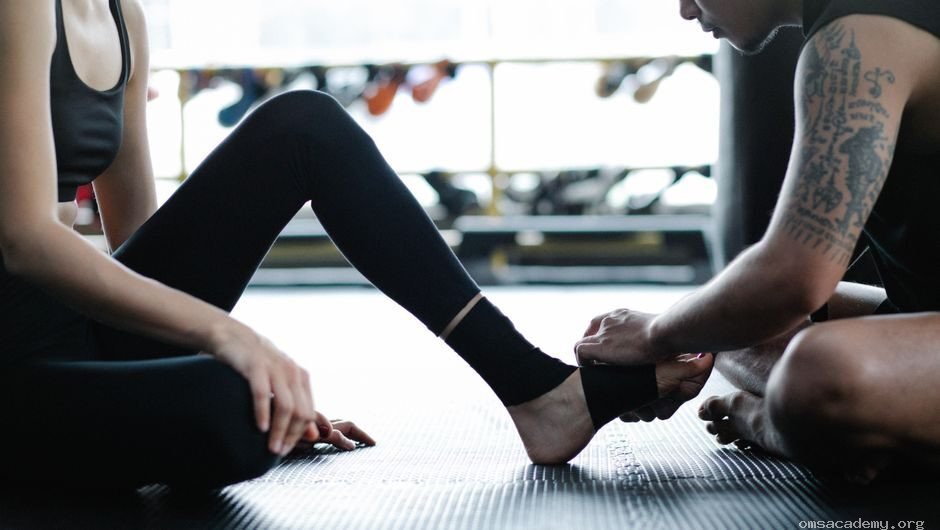
Your body’s inflammatory response is a natural defense, but it must be managed. Protect the area, use a compression sleeve to manage swelling, and elevate the limb to assist fluid drainage. Use ice sparingly to numb sharp pain, but avoid over-icing, as you need blood flow to initiate tissue repair. If the pain persists beyond three days, seek professional evaluation.
Phase 2: Active Rehab (Motion is Lotion)
Once the acute pain subsides, introduce movement. This brings vital nutrients to the damaged area and removes metabolic waste. Focus on isometric holds—flexing the muscle without moving the joint—to maintain strength without grinding the injured area. Use light resistance bands to gently guide the joint through its range of motion, rebuilding neurological pathways. If your right ankle is hurt, focus on left-sided balance, core stability, or upper-body conditioning to keep the rest of your body sharp. Show up bad, but show up.
Phase 3: The Re-integration
Re-injury frequently happens when athletes return too fast. Start with shadow kicking, then progress to heavy bag work at 50% power. Only after you can execute full-speed, pain-free techniques should you return to sparring. Respect the timeline of your own physiology rather than a calendar date. A better human being before a better fighter.
The Invisible Training: Sleep, Nutrition, and the Nervous System
You do not build muscle or repair tendons in the dojo; you build them while you sleep. Training hard five days a week while sleeping five hours a night creates a recovery deficit that eventually leads to injury. Aim for 7 to 9 hours of quality sleep to allow your endocrine system to manage cortisol levels. Prioritize protein to rebuild tissue and Omega-3 fatty acids to combat systemic inflammation. Hydration is equally vital; dehydrated fascia becomes sticky and restricted, increasing the likelihood of tears. A simple rule of thumb: if your urine is dark, your muscles are already at a disadvantage. Champions are built on the days you don’t feel like coming, but they are sustained by the days they spend in recovery.
Ego vs. Longevity: The Mental Game of Injury
The greatest barrier to injury prevention is ego. Ignoring a shoulder twinge to avoid looking weak in front of a partner is how a minor strain becomes a six-month injury. True discipline involves the maturity to step back, foam roll, and perform rehab when others are sparring. Your self-worth is not tied to your daily output. Remember: resting is training. When you prioritize the long game, you ensure that you stay on the mats for years, not just weeks.
Adapting the Art to the Athlete
A 12-year-old’s body is a different machine than a 45-year-old’s. Children are naturally flexible but require significant work on joint stability and spatial awareness to handle growth spurts. Adults, however, must focus on mobility and strength. Building a bulletproof core and strong glutes acts as internal armor for your lower back and knees, allowing your body to absorb the forces of a high-impact sport. If you are over 30, consider adding two sessions of dedicated strength training per week to supplement your Taekwondo practice; your connective tissues will thank you. We have seen students from all backgrounds adapt and thrive by listening to their bodies.
Building a Bulletproof Training Habit
Consistency defeats intensity every time. Training at 80% effort without missing a week is vastly superior to training at 110% for a month before ending up on the couch with a torn hamstring or a sprained ligament. Martial arts is not about fighting—it’s about building character.
Your Pre-Class Mental Checklist
- Did I warm up properly, or did I skip straight to stretching?
- Is my gear in good condition, or are my shin guards worn out and providing no support?
- Am I prioritizing quality of technique over raw, uncontrolled power?
- Is my ego in check, and am I willing to scale back if my body signals pain?
- Do I have a post-class recovery plan, including adequate water and protein intake?
Martial arts is a lifelong pursuit. It should empower you, not break you. By respecting your body’s mechanics and prioritizing recovery, you ensure that your time on the mat remains a source of strength for decades. We are here at Om’s Martial Arts & Fitness Studio to guide you through that process. Strength. Focus. Freedom. Train smart, recover hard, and we will see you on the mat.