
Introduction: Why the History of Taekwondo Matters
Every time a student steps onto the mat at our Vaishali Nagar studio, they are not just learning to throw a roundhouse kick or block a strike. They are joining a lineage that spans two millennia—from ancient Korean kingdoms and the survival-driven training of the Hwarang warriors to the high-stakes, electrified arena of the Olympic Games. Understanding this history is not an academic exercise; it is the foundation of your training. At Om’s Academy, we believe that you cannot truly master the path if you do not understand where the path began. The art you practice today carries the spirit of every generation that preserved it before you.
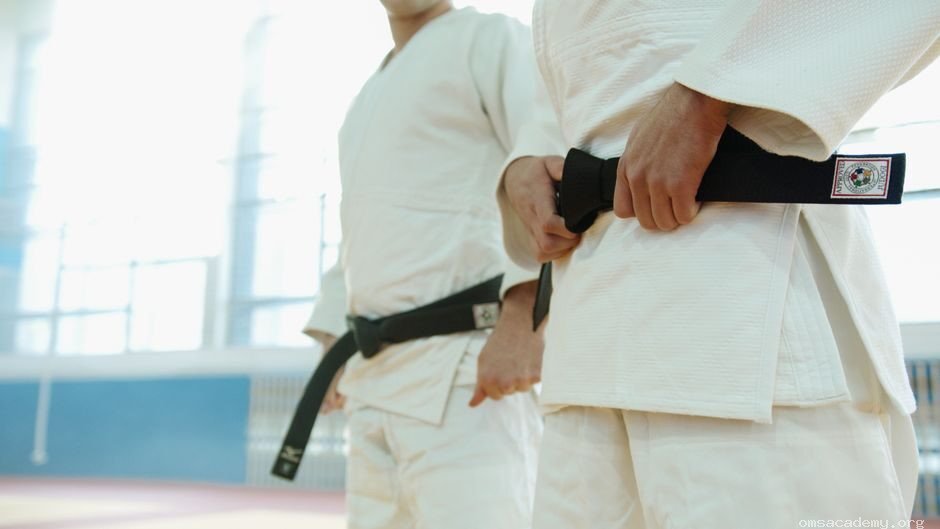
The name itself is a blueprint. Tae (foot), Kwon (fist), and Do (the way) translate to the “way of the foot and the fist.” Yet, this is more than a combat system. It is a discipline, a philosophy, and for thousands of our students in Jaipur, it is a way of life that demands respect, perseverance, and control. When you tie your belt, you are not just securing a piece of fabric; you are honoring a tradition. As we often say on the mats, respect is the first belt you earn.
At Om’s Academy, we teach the World Taekwondo (WT) curriculum, the very same standard that governs Olympic competition. This guide traces the arc of Taekwondo from its roots to its status as a global phenomenon practiced in over 213 countries. Whether you are a beginner tying your first white dobok or a seasoned student training for your black belt, this history will deepen your connection to the work you do in our dojang every single day.
Part 1: Ancient Korean Roots — Where It All Began
The Three Kingdoms Period (57 BCE – 668 CE)
The earliest evidence of structured martial arts on the Korean Peninsula emerged during the Three Kingdoms period. In an era of constant military rivalry between the Goguryeo, Baekje, and Silla kingdoms, unarmed combat was not a hobby—it was a necessity for national survival. Combat training was woven into the fabric of daily life, preparing men for the realities of the battlefield.
Archaeological evidence, such as the murals in the Muyongchong (Tomb of the Dancer) and the Ssangnyong Tomb, provides a window into this era. These 4th-to-6th-century paintings depict figures in stances that would look familiar to any modern student. One man is shown delivering a kick while the other maintains a defensive guard. These are not merely artistic expressions; they are tactical blueprints. They prove that organized, sophisticated fighting systems were thriving on the Korean Peninsula over 1,500 years ago.
Subak and Taekkyeon: The Ancestor Arts
Two primary systems defined this era: Subak and Taekkyeon. Subak was a rigorous system of hand strikes and grappling, often performed at royal court events during the Goryeo dynasty. It served both as military training and a spectator sport. Taekkyeon, meanwhile, focused on fluid, sweeping footwork. It emphasized the grace and agility that would eventually become the hallmark of modern Taekwondo kicking techniques. While Subak provided the power of the fist, Taekkyeon provided the dynamic movement of the feet. Together, they formed the DNA of the modern martial artist.
The Hwarang Warriors of Silla
The philosophical soul of Taekwondo resides in the Hwarang, an elite corps of young aristocrats in the Silla kingdom. These warriors were trained not just in physical combat, but in the “Five Commandments of the Hwarang,” which included loyalty, filial piety, and courage. They believed that a warrior must be a better human being before a better fighter. At Om’s Academy, we emphasize this daily. Technique first, power later, but character always. The Hwarang legacy reminds us that martial arts is not about fighting—it is about building character. When you train with us, you are upholding a code that is as relevant in modern Jaipur as it was in ancient Silla.
Part 2: The Japanese Occupation and the Struggle to Preserve Korean Martial Arts (1910–1945)
The Japanese occupation of Korea (1910–1945) was a dark chapter that threatened to erase Korean cultural identity. Indigenous practices like Taekkyeon were forced underground, and the colonial government actively promoted Japanese arts like Judo and Karate. Yet, this suppression had an unexpected result. Many young Koreans studied Japanese martial arts, gaining exposure to structured curricula and belt systems. When they returned to a liberated Korea, they didn’t just replicate what they had learned. They synthesized the technical structure of Karate with the ancient kicking traditions of their homeland. This hybrid evolution was the catalyst for the birth of Taekwondo.
Part 3: The Birth of Modern Taekwondo (1945–1973)
The Nine Kwans: Korea’s Original Martial Arts Schools
After liberation in 1945, nine distinct martial arts schools, or “kwans,” emerged. These included the influential Chungdokwan, known for its powerful linear style, and the Moodukkwan, which leaned into fluid, circular movements. Each kwan had its own personality, but they shared a common goal: reclaiming a distinct Korean identity. This period was marked by intense dedication. Our head coach, Om Sir, often reminds us that champions are built on the days you don’t feel like coming. These early masters faced monumental challenges to unify their styles, proving that discipline over motivation is the only way to build something lasting.
The Naming of Taekwondo: April 11, 1955
On April 11, 1955, a historic gathering of kwan leaders took place to choose a unified name. They moved away from terms like “Tang Soo Do,” which sounded Japanese, and settled on “Taekwondo.” This was a bold act of cultural sovereignty. It signaled that Korea had its own martial art, one that stood on its own merits.
Kukkiwon: The Spiritual and Technical Home of Taekwondo
The construction of the Kukkiwon in 1973 was the final piece of the puzzle. It established a global headquarters where standards could be set, curriculum could be standardized, and belt promotions could be verified. Today, when you earn a rank at Om’s Academy, that certification is recognized by the Kukkiwon globally. It is the gold standard of martial arts integrity. We don’t believe in shortcuts; the mat doesn’t lie, and your rank is a testament to the sweat and time you have invested.
Part 4: Going Global — From Korean Dojang to the Olympic Stage
The Road to the Olympics
Taekwondo’s rise to Olympic status was meteoric. After being featured as a demonstration sport in the 1988 Seoul Games, it was officially included in the 2000 Sydney Olympics. This achievement was a monumental victory for global martial arts. It turned a traditional practice into a high-performance sport, attracting millions of new practitioners. Today, the sport uses electronic scoring sensors and instant video replay to ensure fairness. Yet, even with all the technology, the core remains the same: the human spirit testing itself against another.
Part 5: India and Taekwondo at the Olympics
India’s relationship with Taekwondo has been one of slow, steady growth. While we are still waiting for our first Olympic medal in the sport, the progress is undeniable. The success of athletes like Aruna Tanwar in the Paralympic arena proves that Indian practitioners have the grit and talent to compete on the world stage. At Om’s Academy, we are committed to closing the infrastructure gap. We provide the same caliber of training that you would find in a high-performance studio in Seoul. The dream of an Indian Olympic medalist is not a fantasy; it is an inevitable outcome of the hard work being done on mats across the country today.
Part 6: Taekwondo in 2026 — What Makes It Timeless
In 2026, Taekwondo is more than a sport; it is a global ecosystem. From local community centers to the Olympic arena, it provides a structure for personal growth. At Om’s Academy, we teach our students that showing up is half the battle. Show up bad, but show up. When you are tired, when you are stressed, or when life feels overwhelming, the mat is your sanctuary. The techniques you learn today are the same ones practiced by the masters of the last century. By training with us, you are not just getting fit; you are preserving a legacy.
What Comes Next in This Series
This is the start of a 27-article series at Om’s Academy. We are here to provide the clarity and depth you need to excel in your training. Next, we will examine the specific physical and mental benefits of Taekwondo, breaking down how the movements we drill in class improve your coordination, bone density, and real-life confidence. Whether you are a busy professional or a parent looking for the right environment for your child, our upcoming articles will provide the insights you need to make the most of your training.
Until then, keep showing up. Keep practicing. Remember: the mat doesn’t lie, and your progress is the direct result of your discipline. See you on the mat.
Om’s Academy, Jaipur | Strength. Focus. Freedom. | Authorised Kukkiwon Curriculum