
What Is Taekwondo? A Beginner’s Complete Guide
You’ve likely seen the high-flying kicks in action movies or watched Olympic athletes trade lightning-fast strikes on TV. But inside our Vaishali Nagar studio, Taekwondo looks different. It is less about the spectacle and more about the quiet, sweat-soaked work of refining a single movement until it becomes second nature. Taekwondo is a Korean martial art and Olympic combat sport emphasizing high-speed kicks, precise hand strikes, and, above all, the mental fortitude to stay on the path.
Translated as “the way of the foot and fist,” it is far more than a collection of techniques. It is a structured discipline that balances physical intensity with a philosophical commitment to self-improvement. Whether you are five years old or fifty, the belt system provides a roadmap for your progress, turning the abstract goal of “getting better” into a tangible, step-by-step pursuit.
The Short Answer
At its core, Taekwondo (태권도) is the world’s most widely practiced martial art, with over 80 million practitioners across 210 countries. Since becoming an official Olympic sport in 2000, it has evolved into a global standard for athletic performance. However, if you walk into our academy expecting a simple gym workout, you will be surprised. We view this as a complete system of education.
Taekwondo is defined by several pillars:
- Signature Kicks: Using the legs as long-range weapons with speed and precision.
- Hand Techniques: Utilizing punches and knife-hand strikes for close-quarters engagement.
- Strategic Footwork: Mastering the distance between you and an opponent.
- The Belt Hierarchy: A clear, merit-based progression from white to black belt.
- Character Development: The internal work that happens when you practice patience and humility.
Calling Taekwondo “just kicking” is like calling a symphony “just noise.” It is a sophisticated language of movement. At Om’s Martial Arts & Fitness Studio, we follow the World Taekwondo (WT) curriculum. This is the same system used by the Taekwondo Federation of India (TFI), ensuring that whether you train for fitness or for the podium, your technical foundation is internationally recognized.
What Does “Taekwondo” Mean?
The name is a blueprint for the art itself:
| Character | Korean | Meaning |
|---|---|---|
| Tae | 태 (跆) | To kick or smash with the foot |
| Kwon | 권 (拳) | To punch or strike with the hand |
| Do | 도 (道) | The way or the philosophical path |
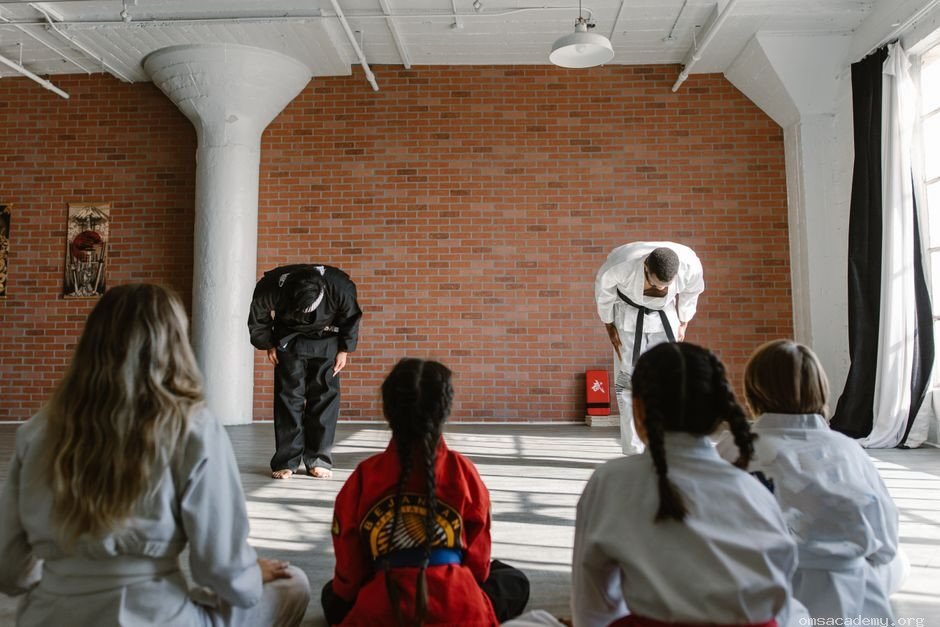
The final character, “Do,” is the most vital. It separates a fighter from a martial artist. Technique first, power later—that is our mantra. The “Do” implies that you aren’t just learning to strike; you are learning to control your impulses, respect your partners, and cultivate a spirit that doesn’t quit when the training gets tough. Respect is the first belt you earn.
A Brief History (For Beginners)
You don’t need to memorize dates to be a good student, but understanding the lineage helps you respect the craft. Our training is rooted in a tradition that spans over 2,000 years, tracing back to the ancient Hwarang warriors of the Silla Kingdom. These warriors weren’t just soldiers; they were scholars of ethics and combat.
In 1955, the various schools of Korean martial arts unified under the name “Taekwondo.” General Choi Hong Hi was a primary force in this consolidation, creating a standardized curriculum that moved away from fragmented styles into a cohesive, global system. Today, under the guidance of World Taekwondo, the sport has reached its highest level of athletic refinement, emphasizing safety, fairness, and explosive speed.
What Do You Actually Do in Taekwondo?
Your time on the mat is divided into structured blocks. We do not believe in random exercise. Everything has a purpose.
1. Stances (Seogi)
Everything begins with how you stand. If your foundation is weak, your kick will be slow. We spend significant time on the “Attention Stance” (Charyeot Seogi) and “Ready Stance” (Junbi Seogi). These aren’t just poses; they are moments of mental reset. You learn to generate power from your core and legs, not just your arms.
2. Blocks (Makgi)
Before you learn to strike, you learn to protect. You will master the low, middle, and high blocks. These are the building blocks of your defense, teaching you to read an opponent’s movement and respond with precision rather than panic.
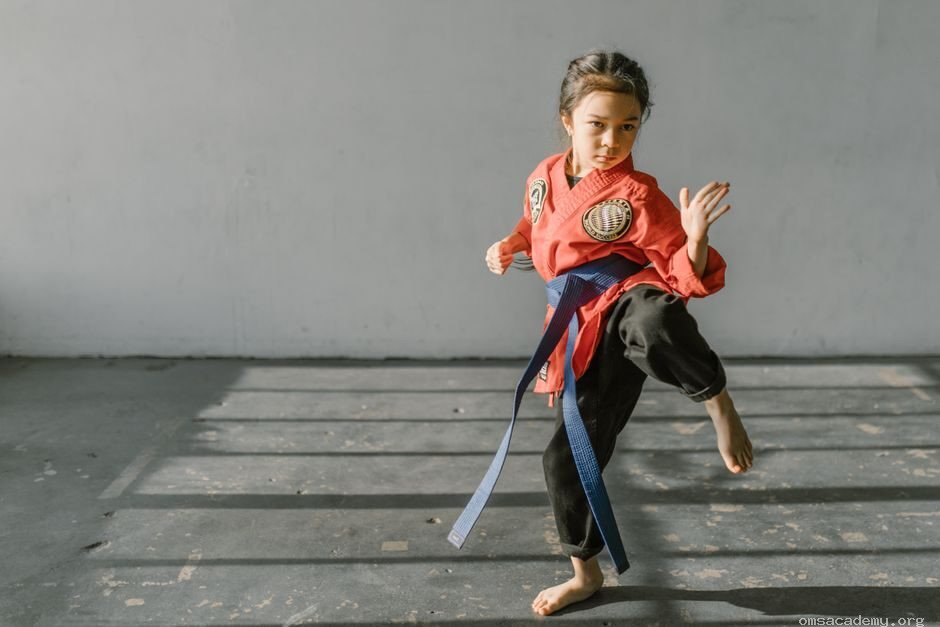
3. Kicks (Chagi)
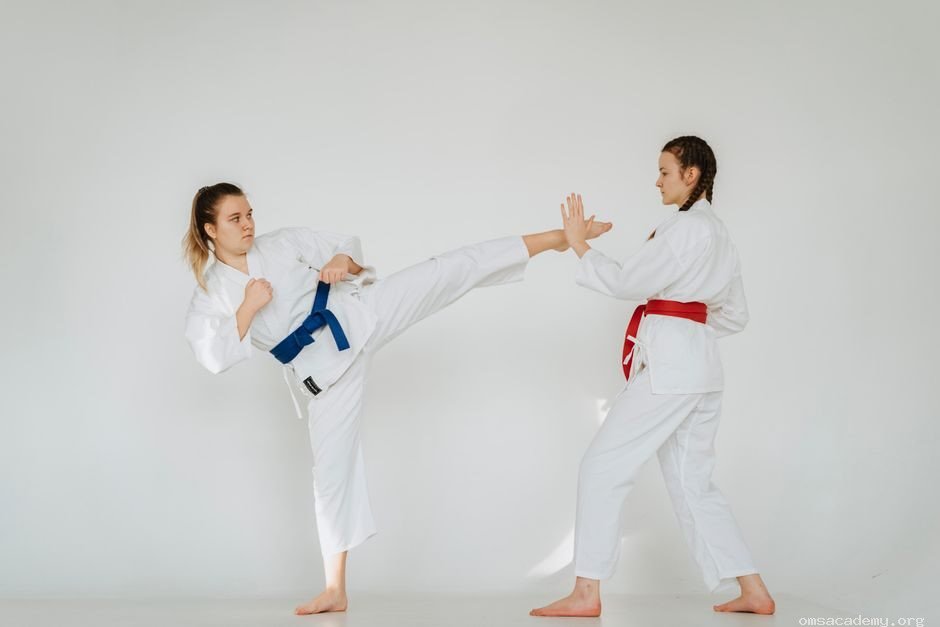
This is where Taekwondo earns its reputation. You will move through a progression: from the foundational Front Kick (Ap Chagi) to the powerful Roundhouse (Dollyo Chagi), and eventually to advanced aerial maneuvers like the Tornado and spinning hook kicks. Remember: The mat doesn’t lie. If your balance is off, the kick will fail. We fix the balance before we add the power.
4. Poomsae (Forms)
Poomsae are choreographed sequences of attacks and defenses performed against imaginary opponents. It is a moving meditation. When you perform a Poomsae, you are practicing your timing, your breathing, and your focus. It requires you to be present in every single movement.
5. Sparring (Gyeorugi)
This is the application of your skills in a controlled, safe environment. We prioritize safety gear and strict rules. Beginners start with pre-arranged drills to build confidence. We don’t throw you into the deep end; we build your skill set until you are ready to handle the intensity of free sparring.
The Belt System (Quick Overview)
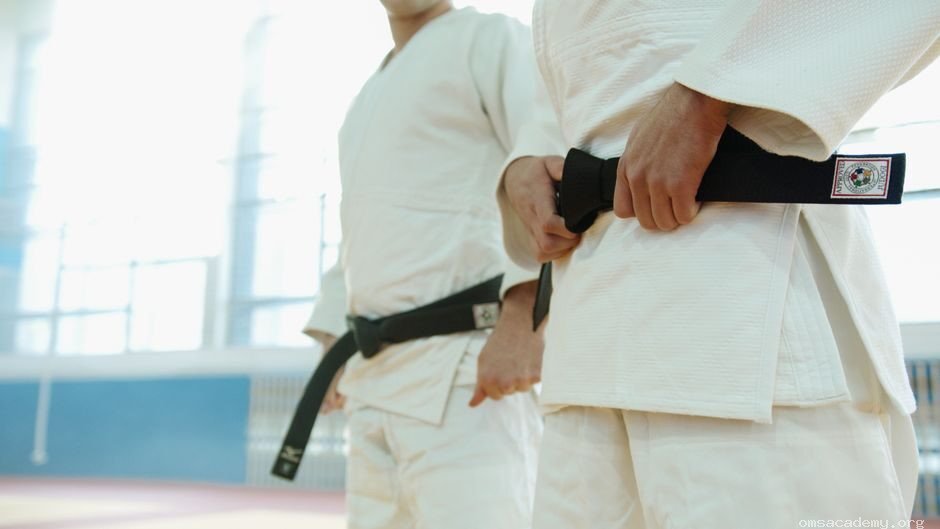
Belts at Om’s are not given; they are earned. Every three months, we hold gradings. You are tested on your Poomsae, your sparring intensity, your breaking technique, and your knowledge of the art’s theory.
- White: The beginning. Learning to control your own body.
- Yellow: Introducing the roundhouse kick and basic movement.
- Green: Developing side kicks and understanding distance.
- Blue: Adding complexity with spinning kicks and combinations.
- Red: Preparing for the intensity of the black belt curriculum.
- Black: The start of true mastery. A black belt is simply a white belt who refused to quit.
Who Is Taekwondo For?
In our studio, we see people from all walks of life. Kids learn to sit still and focus, which is a rare skill in today’s world. Teens learn to channel their energy into something constructive rather than destructive. Adults find a sanctuary from the stress of their work lives. Women find a space to build genuine, functional confidence that translates to real-life situations. Discipline over motivation—that is why our students stay for years. We don’t promise quick results; we promise a stronger, more capable version of yourself if you simply show up.
5 Key Benefits of Taekwondo
- Metabolic Conditioning: A single, high-intensity session can burn upwards of 600 calories. You aren’t just moving; you are conditioning your heart and lungs.
- Dynamic Flexibility: You will find that your range of motion improves naturally as your kicks reach higher and your hips open up.
- Sharper Focus: When you are mid-spar, you cannot check your phone. You cannot worry about tomorrow. You are forced to be in the moment.
- Resilience: You will fail a technique. You will get tired. You will have days where you don’t feel like coming. Champions are built on the days you don’t feel like coming.
- Community: You will be training alongside people who push you to be better. We aren’t just a gym; we are a group of people committed to character.
What Do You Need to Start?
You don’t need fancy gear. You don’t need to be fit. You don’t even need to be flexible. All you need is a t-shirt, comfortable track pants, and a willingness to be a beginner. We provide the rest. The most difficult part of your training is walking through the door for the first time. Once you are on the mat, the rest of the world fades away.
Every black belt you see in our studio was once a person standing in your shoes, feeling a bit awkward and unsure. That feeling is the precursor to growth. Come see us in Vaishali Nagar, watch a session, and decide for yourself if you’re ready to start your own path.
[Book Your Free Taekwondo Trial Class at Om’s Martial Arts & Fitness Studio]
Om’s Martial Arts & Fitness Studio — Strength. Focus. Freedom. A better human being before a better fighter.