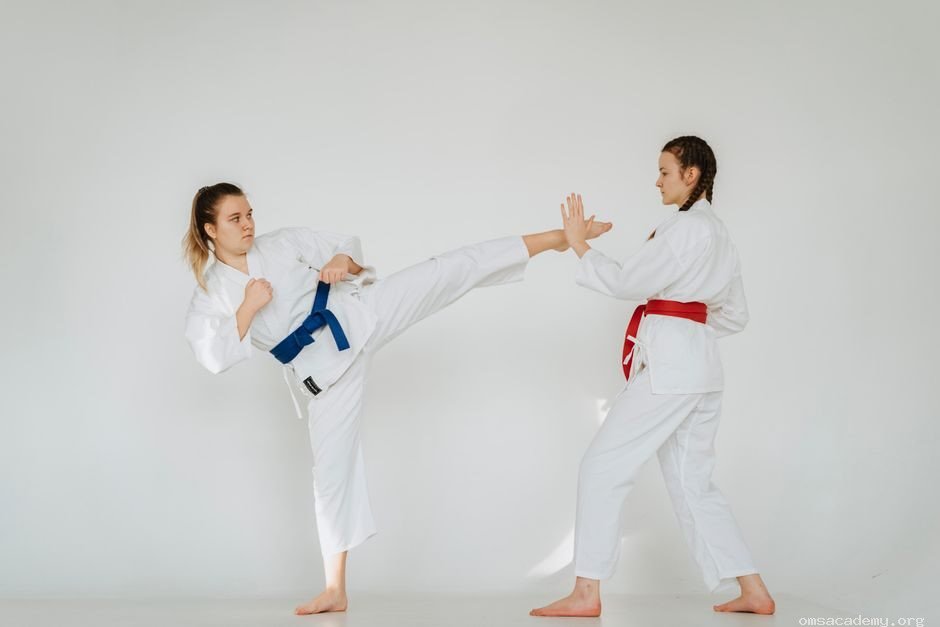
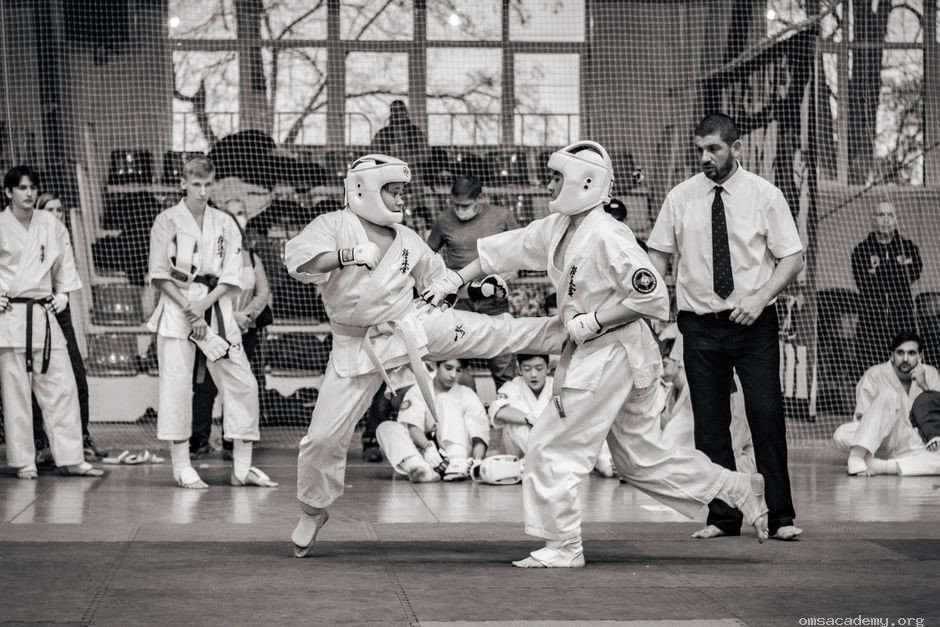
Taekwondo and Karate are popular striking-based martial arts with distinct technical and philosophical differences. Taekwondo prioritizes high, fast kicks and dynamic movement, making it a prominent Olympic sport. Conversely, Karate offers a balanced approach to hand and foot techniques, emphasizing traditional forms, rooted stances, and practical application.
Both disciplines foster discipline, fitness, and confidence in practitioners. While Taekwondo excels in cardiovascular training and flexibility, Karate provides a broader arsenal of hand strikes. Choosing between them depends on individual goals, such as pursuing Olympic competition, mastering traditional artistry, or developing specific physical attributes.
The Question Everyone Asks
If you are considering starting a martial art — for yourself or your child — the most common crossroads is:
“Should I choose Taekwondo or Karate?”
Both are striking-based martial arts. Both use belts. Both are Olympic-recognized. Both teach discipline, respect, and self-defence. And both have millions of practitioners worldwide.
But they are fundamentally different in technique emphasis, training methodology, competition format, and philosophical heritage.
This guide breaks down every difference so you can make an informed decision — not a guess.
At Om’s Martial Arts & Fitness Studio, we teach Taekwondo (WT system) as our primary martial art. But we believe in honest education. If Karate is a better fit for your goals, we will tell you. Our job is to help you find your path, not just fill our classes.
[↑ Back to: The Complete Guide to Taekwondo]
Side-by-Side Comparison
| Factor | Taekwondo | Karate |
|---|---|---|
| Origin | Korea (1955, roots ~2,000 years) | Okinawa / Japan (1920s, roots ~500 years) |
| Meaning | “Way of the Foot and Fist” | “Empty Hand” |
| Primary Emphasis | Kicks (70%) + Punches (30%) | Balanced – Punches, kicks, strikes, blocks (roughly 50/50) |
| Kicking Style | High, fast, spinning, jumping | Lower, more linear, fewer spinning kicks |
| Hand Techniques | Punches, knife-hand, ridge-hand | Punches, knife-hand, elbow, palm heel, finger strikes |
| Stances | Narrower, more mobile, sport-oriented | Wider, deeper, more rooted |
| Forms | Poomsae (Taegeuk series) | Kata (Heian/Pinan series, advanced kata) |
| Sparring | Full-contact (WT), electronic scoring, Olympic sport | Semi-contact (traditional) or full-contact (Kyokushin) |
| Olympic Sport | ✅ Yes (since 2000) | ✅ Yes (Tokyo 2020 only; not in 2024/2028) |
| Governing Body | World Taekwondo (WT) | World Karate Federation (WKF) |
| Belt System | 6 colors + 9 dan levels | Varies by style (typically 6-8 colors + 10 dan) |
| Philosophy | Five Tenets (Courtesy, Integrity, Perseverance, Self-Control, Indomitable Spirit) | Dojo Kun (varies by style; generally: character, sincerity, effort, etiquette, self-control) |
| Uniform | Dobok (V-neck, often white) | Gi (cross-over jacket, white) |
| Competition Area | Octagonal mat (8m × 8m) | Square mat (8m × 8m) |
| Protective Gear (sport) | Head guard, chest protector (hogu), shin/forearm guards, gloves | Gloves, foot/shin protectors, body protector (WKF) |
| Best For | Speed, flexibility, sport competition, Olympic pathway | Tradition, balanced striking, self-defence applications, kata artistry |
Technique Comparison – What’s Different?
Kicks
This is the biggest difference.
Taekwondo is built around kicking. Approximately 70% of techniques are kicks. The art emphasizes:
- Height – Head-height kicks are standard from green belt onward
- Speed – Fast, snapping kicks with rapid chamber and retraction
- Variety – Spinning, jumping, aerial, and combination kicks
- Sport application – Kicks score points in Olympic sparring (electronic sensors)
Karate uses kicks, but they are secondary to hand techniques. Kicks tend to be:
- Lower – Typically targeting the midsection or below
- More linear – Front kick, side kick, roundhouse (less spinning/aerial)
- Power-focused – Emphasis on hip drive and grounding
- Self-defence oriented – Practical application over spectacle
Verdict: If you want to develop spectacular, high, fast kicking ability, Taekwondo is unmatched. If you prefer a balanced hand-and-foot arsenal, Karate offers more variety in hand techniques.
Hand Techniques
Taekwondo hand techniques:
- Front punch, reverse punch
- Knife-hand strike, ridge-hand strike
- Backfist, hammer fist
- Limited elbow work (mostly in self-defence context)
Karate hand techniques:
- Straight punch (gyaku-zuki, oi-zuki)
- Knife-hand (shuto-uchi)
- Palm heel (teisho-uchi)
- Elbow strikes (empi-uchi)
- Finger strikes (nukite)
- Backfist (uraken)
- More variety and deeper application study (bunkai)
Verdict: Karate has a broader hand technique arsenal with more emphasis on practical application (bunkai). Taekwondo’s hand techniques are effective but less varied.
Stances & Movement
Taekwondo stances are generally narrower and more mobile, optimized for:
- Quick direction changes
- Rapid kick deployment
- Sport sparring footwork (bouncing, switching)
Karate stances are generally wider and deeper, optimized for:
- Rooted power generation
- Stability against pushes/throws
- Traditional kata performance
Verdict: Taekwondo movement is more dynamic and sport-oriented. Karate movement is more grounded and traditional.
Forms (Poomsae vs Kata)
| Feature | Taekwondo Poomsae | Karate Kata |
|---|---|---|
| Number (beginner) | 8 Taegeuk forms | 5 Heian/Pinan forms (varies by style) |
| Number (advanced) | 9+ (Koryo, Keumgang, etc.) | 20+ (style-dependent) |
| Performance style | Flowing, rhythmic, athletic | Precise, powerful, deliberate |
| Competition | Yes (WT Poomsae events) | Yes (WKF Kata events) |
| Application study | Limited (growing) | Extensive (bunkai is central) |
Verdict: Karate places greater emphasis on kata and its practical applications (bunkai). Taekwondo poomsae is more athletic and performance-oriented.
Competition & Sport Comparison
Taekwondo (WT – Olympic)
- Full-contact sparring with electronic scoring (PSS sensors in chest guard and foot protectors)
- 3 rounds × 2 minutes (best of 3 format)
- Points: Punch = 1, Body kick = 2, Head kick = 3, Spinning body = 4, Spinning head = 5
- Olympic sport since 2000 (confirmed through 2028 Los Angeles)
- Weight categories for fair competition
- Extremely fast, dynamic, and spectator-friendly
Karate (WKF)
- Semi-contact (point fighting) – controlled techniques, referee stops after each point
- 3 minutes per match (senior)
- Points: Punch = 1 (Yuko), Body kick = 2 (Waza-ari), Head kick/throw + strike = 3 (Ippon)
- Olympic sport at Tokyo 2020 only – not included in 2024 Paris or 2028 LA
- Kata competition is a separate discipline
- More traditional, less spectator-dynamic than Taekwondo
Kyokushin Karate (Full-Contact)
- Full-contact, no protective gear (except groin guard)
- No punches to the face (kicks to the head allowed)
- Knockdown format
- Extremely tough, physically demanding
- Not Olympic; governed by IKO / IFK
Verdict: If your goal is Olympic competition, Taekwondo is the clear choice (Karate is currently not in the Olympic program). If you prefer traditional point-fighting or full-contact knockdown, Karate offers those formats.
Which Is Better for Kids?
| Factor | Taekwondo | Karate |
|---|---|---|
| Starting age | 5+ (at Om’s) | 5-6+ (most dojos) |
| Fun factor | High (kicking is exciting for kids) | Moderate-High (structured, disciplined) |
| Discipline | Excellent (bowing, tenets, belt system) | Excellent (dojo kun, etiquette, kata) |
| Physical development | Flexibility, coordination, cardio | Balance, coordination, full-body strength |
| Anti-bullying | Confidence + distance management | Confidence + practical techniques |
| Competition pathway | District → State → National → Olympic | District → State → National → World (WKF) |
| Injury risk | Low (supervised, protective gear) | Low (supervised, controlled contact) |
Both are excellent for kids. The choice often comes down to:
- Does your child love kicking? → Taekwondo
- Does your child prefer a more structured, traditional environment? → Karate
- Is Olympic competition a goal? → Taekwondo
At Om’s, we see many parents bring children for a free trial class and let the child’s reaction decide. Kids often gravitate toward the art that “feels right” within the first 10 minutes.
[→ Related: Is Taekwondo Good for Kids? A Parent’s Complete Guide]
Which Is Better for Self-Defence?
This is nuanced.
Taekwondo for self-defence:
- ✅ Excellent distance management (you learn to control range)
- ✅ Powerful kicks to stop an attacker
- ✅ Confidence and awareness
- ⚠️ Limited hand techniques
- ⚠️ No grappling or ground work
- ⚠️ Sport-focused training may not address real-world scenarios
Karate for self-defence:
- ✅ Broader striking arsenal (punches, elbows, knees, low kicks)
- ✅ Bunkai (application study) teaches practical use of techniques
- ✅ Some styles include grabs, releases, and throws
- ⚠️ Traditional training can be too rigid / non-alive
- ⚠️ No ground work
- ⚠️ Quality varies enormously between dojos
Honest assessment: Neither Taekwondo nor Karate is a complete self-defence system on its own. Both lack grappling, ground fighting, and real-world scenario training. For dedicated self-defence, we recommend our Self Defence program at Om’s, which integrates awareness, de-escalation, practical strikes, escapes, and legal education.
That said, any martial art is better than no martial art for self-defence. Both Taekwondo and Karate develop the awareness, confidence, and physical capability that deter and defend against threats.
[→ Related: Self Defence vs Martial Arts – What’s the Difference?]
Which Is Better for Fitness?
| Fitness Component | Taekwondo | Karate |
|---|---|---|
| Cardiovascular | ⭐⭐⭐⭐⭐ (constant movement, sparring) | ⭐⭐⭐⭐ (kata, kumite) |
| Flexibility | ⭐⭐⭐⭐⭐ (high kicks demand it) | ⭐⭐⭐ (moderate) |
| Leg strength | ⭐⭐⭐⭐⭐ | ⭐⭐⭐⭐ |
| Upper body | ⭐⭐⭐ | ⭐⭐⭐⭐ |
| Core | ⭐⭐⭐⭐ | ⭐⭐⭐⭐ |
| Coordination | ⭐⭐⭐⭐⭐ | ⭐⭐⭐⭐ |
| Calorie burn (60 min) | 500-800 | 400-700 |
Verdict: Taekwondo has a slight edge for cardio, flexibility, and leg development. Karate offers more balanced upper-body engagement. Both are excellent full-body workouts.
Can You Train Both?
Yes. Many martial artists cross-train in Taekwondo and Karate (or other arts). The skills complement each other:
- Taekwondo improves your kicking range, speed, and flexibility
- Karate improves your hand techniques, stances, and practical applications
At Om’s Martial Arts & Fitness Studio, while we specialize in Taekwondo, our Kickboxing and MMA programs incorporate the balanced striking that Karate practitioners value. Many students find that Taekwondo + Kickboxing at Om’s gives them the best of both worlds: spectacular kicks AND practical hand combinations.
[→ Related: Taekwondo vs Kickboxing – Which Should You Choose?]
The Decision Framework
Ask yourself these questions:
| If your priority is… | Choose… |
|---|---|
| Olympic competition pathway | Taekwondo |
| Spectacular kicking ability | Taekwondo |
| Flexibility and dynamic movement | Taekwondo |
| Balanced hand-and-foot striking | Karate |
| Traditional martial art philosophy | Karate |
| Practical application study (bunkai) | Karate |
| Full-contact knockdown fighting | Kyokushin Karate |
| Sport sparring with electronic scoring | Taekwondo (WT) |
| Kids’ discipline and confidence | Both (excellent) |
| General fitness and stress relief | Both (excellent) |
| Self-defence (as a primary goal) | Neither alone → Add a dedicated Self-Defence program |
Frequently Asked Questions
Q: Is Taekwondo harder than Karate?
A: Neither is objectively “harder.” Taekwondo demands more flexibility and dynamic movement. Karate demands more precision and rooted power. The difficulty depends on your natural attributes and the quality of instruction.
Q: Which has more effective kicks?
A: Taekwondo. It is the kicking art. The variety, speed, and height of Taekwondo kicks are unmatched by any other martial art.
Q: Which is more traditional?
A: Karate has a stronger emphasis on tradition, kata, and lineage. Taekwondo is more modern and sport-oriented, though it has deep historical roots.
Q: Can I switch from Karate to Taekwondo (or vice versa)?
A: Yes. Many fundamentals transfer (stances, basic punches, discipline, belt etiquette). You may need to adjust your kicking technique (Taekwondo) or hand technique (Karate), but the transition is manageable. At Om’s, students with prior Karate experience often adapt to Taekwondo within 2-3 months.
Q: Which is more popular globally?
A: Taekwondo, with 80+ million practitioners in 210+ countries. Karate has approximately 50-100 million practitioners (estimates vary widely due to the number of styles). Taekwondo’s Olympic status gives it broader institutional reach.
Q: Which is better for MMA?
A: Neither is a complete MMA base. However, Taekwondo’s kicking ability has been used effectively in MMA by fighters like Anthony Pettis, Yair Rodriguez, and Valentina Shevchenko. Karate’s distance management and blitz attacks have been used by Lyoto Machida, Stephen “Wonderboy” Thompson, and Georges St-Pierre. Both can contribute to an MMA game when combined with wrestling and BJJ.
[→ Related: MMA vs Taekwondo – Understanding the Differences]
Try Before You Decide
Reading comparisons is helpful. But the best way to choose is to try both.
At Om’s Martial Arts & Fitness Studio, we offer a free trial class for Taekwondo. Walk in, train for an hour, and feel whether it resonates with you or your child.
If after the trial you feel Karate is a better fit, we will honestly point you toward a reputable Karate dojo in the area. Your martial arts journey matters more than our enrollment numbers.
But if you feel the pull of a perfectly executed roundhouse kick, the thrill of a spinning hook kick, the pride of earning your next belt — then Taekwondo at Om’s is your home.
[→ Book Your Free Taekwondo Trial Class at Om’s Martial Arts & Fitness Studio]
[→ Compare All Our Programs – Taekwondo, Kickboxing, MMA, Yoga, Fitness]
[→ Read the Complete Guide to Taekwondo]
Om’s Martial Arts & Fitness Studio – Honest guidance. Real training. Your journey, your choice.