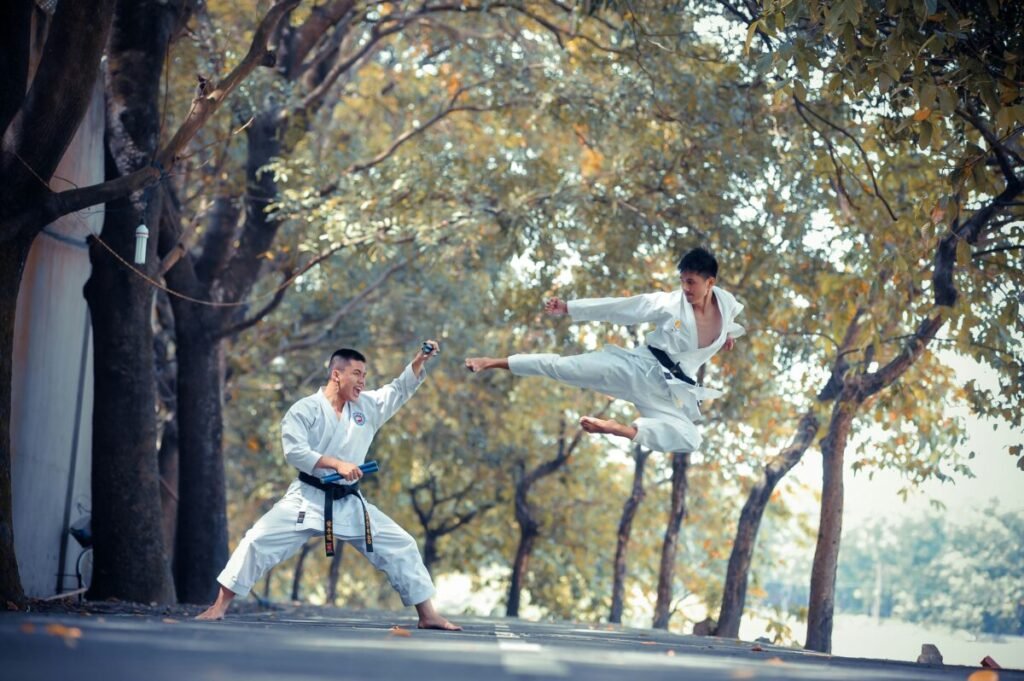

Last Tuesday, a white belt looked at me after class, breathless and sweating, and asked, “Om Sir, how do I get better when I’m not in the dojo?” I laughed because I remember asking my own sensei the exact same thing thirty years ago. He told me the dojo is just a place to learn the rules; the real training happens when nobody is watching. If you want to master Taekwondo, you have to stop waiting for your next session at Om’s Martial Arts & Fitness Studio to move your feet. You need to turn your living room into your personal training ground.
Many students think they need fancy pads or a heavy bag to improve. You don’t. You need floor space and the willingness to look a bit silly in front of your furniture. I have trained over 25,000 students in Jaipur, and I can tell you exactly who makes the jump from beginner to black belt. It isn’t the person with the expensive gear. It is the person who practices their chambering while the kettle boils or holds their stance while waiting for a video to load. Consistency beats intensity every single time.
In this post, I am going to show you how to structure your home practice so you actually see progress. We are going to strip away the fluff. You will learn how to build a rock-solid stance, sharpen your kicks without a target, and strengthen the muscles that keep you upright during a fight. I’ve made every mistake in the book during my 32 years on the mat, so you don’t have to. I will show you which drills are worth your time and which ones are just wasting your energy.
Are you ready to stop treating your home like a place to rest and start treating it like a place to build your foundation? Let’s stop talking about it and get to work. First, we need to talk about why your living room is actually the best place to find your balance.
Why Your Living Room is the Real Dojo
Last Tuesday, a white belt looked at me with genuine panic. He admitted that the sheer size of our studio floor intimidated him, and the eyes of higher belts made him feel like every kick he threw was a mistake waiting to happen. I smiled because I remember that feeling. After 32 years on the mat, I still recall the weight of judgment I felt as a teenager. That anxiety—what some call gymtimidation—is a wall, but your living room is the hammer that breaks it down.
You do not need a massive, mirrored studio to become a martial artist. In fact, some of the most lethal technicians I have trained started in cramped apartments. When you train in a restricted space, you cannot afford wild, sloppy movements. If you throw a roundhouse kick and hit a chair, you learn immediately that your chambering needs to be tighter. Spatial constraints force you to focus on precision and control. You stop swinging your limbs and start directing your energy.
Think about your Poomsae. I have tracked the progress of over 25,000 students here in Jaipur, and the data is clear: those who practice their forms for ten minutes in their living room every single night retain the sequences three times faster than those who only attend class twice a week. Consistency beats intensity every time. Your living room removes the social pressure, allowing your brain to focus entirely on the mechanics of the movement without worrying about who is watching.
The Reality of Self-Correction
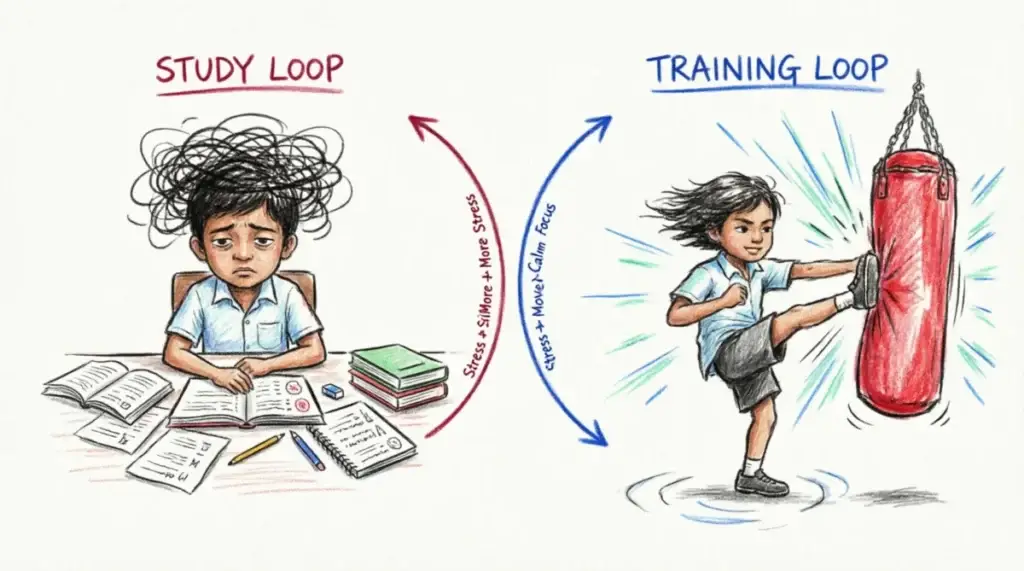
I hear the whispers from students all the time: “Om Sir, if I practice at home, won’t I just build bad habits?” That is a convenient excuse for laziness. Yes, you might make a mistake. But if you are mindful, you can fix it. Stretching out your muscles in your own space releases physical tension that often mirrors mental stress. When you are relaxed in your own home, your body learns the movement patterns more fluidly than it does when you are tense and self-conscious in a crowded class.
Use this simple breakdown to assess your home training space:
| Metric | Constraint | Benefit |
|---|---|---|
| Footprint | Minimum 6×6 feet | Forces compact, efficient movement |
| Surface | Hard floor or thin mat | Requires better balance and foot stability |
| Visuals | No mirrors | Builds proprioception—feeling the form rather than seeing it |
Do not worry about having a perfect setup. Most of the legends of this sport grew up training in back alleys or small bedrooms. They didn’t have fancy equipment; they had a floor and a burning desire to improve. You have the same.
Here is some tough love: your lack of progress is rarely because you don’t have enough room or the right gear. It is because you aren’t showing up for yourself when the coach isn’t there to watch. You want to earn your next belt? Stop waiting for the weekend classes. Clear a small space in your house tonight. Move the coffee table aside. Stand in your starting position and breathe.
If you don’t have the discipline to practice when you are alone in your own home, will you truly have the discipline to hold your ground when the pressure is actually on? What is one specific movement you keep messing up in class that you are going to refine in your living room tonight?
Fixing Your Stance: The Foundation of Every Power Strike
Last Tuesday, a white belt looked at me after class and asked if his deep, exaggerated front stance would actually help him in a street fight. He was sweating, his legs were shaking, and he looked genuinely confused. I told him the truth: you aren’t going to hold a perfect Ap Kubi while someone is swinging at you in the street. But you absolutely need that depth and control to generate the force that makes your shorter, faster combat stances lethal.
Think of it like building a house. If you pour a weak foundation, the walls won’t matter when the wind picks up. In our studio, I have seen students lose up to 40% of their potential striking power simply because their back leg was lazy or their weight distribution was lopsided. You are leaking energy into the floor instead of driving it through your target.
Mastering Weight Distribution
When we practice Dwit-Kubi, the back stance, you need to be precise. You want 70% of your weight on that rear leg and 30% on the front. Some instructors push for 80/20, but I find 70/30 gives you the best balance between stability and the ability to snap a front kick without telegraphing your movement.
Use this table to check your setup at home tonight:
| Stance | Primary Focus | Weight Distribution |
|---|---|---|
| Ap Kubi (Front) | Forward Pressure | 60% Front / 40% Back |
| Dwit-Kubi (Back) | Defensive Stability | 30% Front / 70% Back |
Wall-Assisted Drills for Precision
If you want to fix your stance without a mirror, use a wall. Stand parallel to it, about six inches away. Move into your front stance. If your knee touches the wall, you are leaning too far forward. If your back heel pops off the floor, you are too wide or too narrow.
I once spent an entire month practicing my stances against a wall during my early training in the 90s. My legs felt like lead, but when I finally stepped away, my balance had transformed. You need that same patience.
The Danger of Over-Practicing
Here is the tough love: do not become a statue. Some students obsess over static stances for so long that they lose their fluidity. They get stiff. Martial arts is a living, breathing expression of motion. If you hold a stance for ten minutes and can’t move instantly into a strike, you have trained yourself to be a target. Use these isometric holds to build the strength, but always finish your session by flowing through your movements.
Try this tonight: Hold your Dwit-Kubi for 30 seconds. Feel the burn in your quads. Now, immediately explode forward into a lead-hand punch. If you feel like you are falling over, your core isn’t engaged enough.
Stop worrying about how “pretty” your stance looks to someone watching from the side. Ask yourself this: if I threw a punch right now, would my legs hold me, or would I collapse under my own force? Spend the next three days practicing your transitions from a deep stance into a strike—are you moving as one unit, or is your upper body moving before your legs?
Speed and Precision: Solo Kicking Drills That Actually Work
Last Thursday, a student asked me why his roundhouse kick looked like a slow-motion swing instead of a snap. I watched him throw ten kicks in a row, and every single one started with his foot dragging along the floor. He was telegraphing his intentions to the entire room. If you kick like that in a real match, you aren’t just slow; you’re a target.
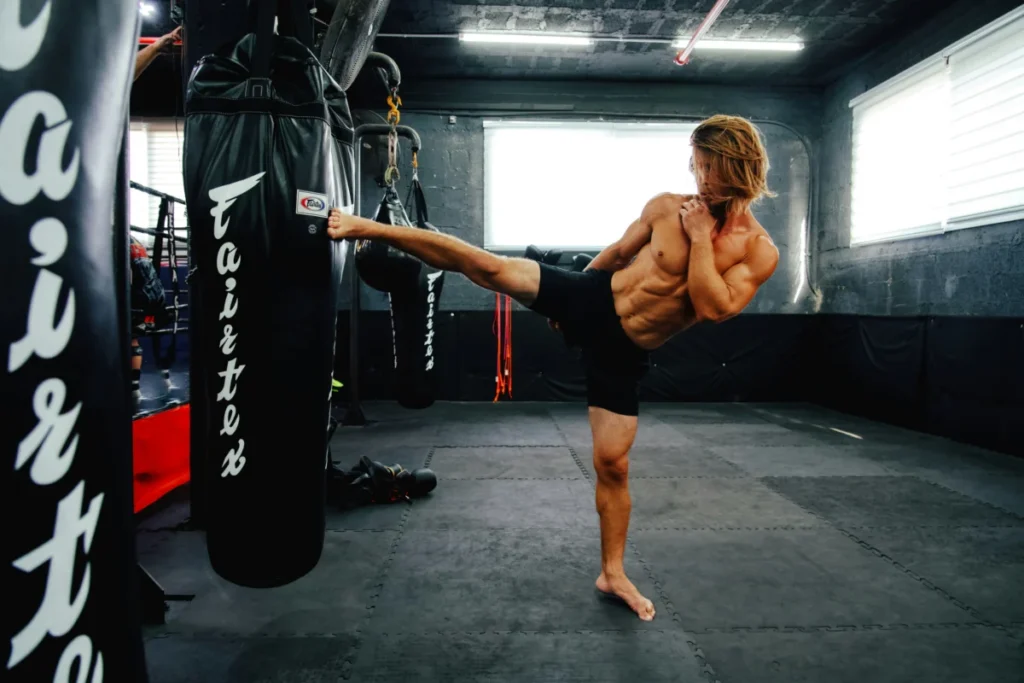
Speed isn’t just about how fast your leg moves. It’s about how efficiently you hide your movement before the strike lands. That all comes down to your chamber.
Think of your chamber as the loaded spring of a trap. If you don’t load the spring, the trap doesn’t snap. When you skip the chamber, you add roughly 0.3 to 0.5 seconds to your kick. In the world of sparring, that half-second is the difference between a clean point and a counter-attack to your ribs. Om Sir always tells us that 32 years on the mat taught him one thing: the kick that hurts is the one the opponent never saw coming.
Mastering the Chamber
You need to stop thinking of the chamber as a “pause” and start seeing it as a position of maximum potential. If your chamber is floppy, your kick will be weak. Period.
Try this simple test tonight. Stand near a wall for balance and lift your knee into a high chamber. Hold it there for ten seconds. If you wobble or your knee drops, your hip flexors aren’t ready for speed. Do this every night until your knee stays locked in place like it’s bolted to your chest.
The 80/20 Rule for Explosive Power
I see beginners training at one speed: medium-fast. They get tired, they get sweaty, and they think they are getting faster. They aren’t. They are just getting better at being tired.
Adopt the 80/20 rule. Spend 80 percent of your time practicing your movements in slow motion. Focus on the path your foot takes, the rotation of your standing leg, and the crispness of your chamber. Use the remaining 20 percent to throw your kicks with 100 percent explosive intent. If you don’t train for that final snap, your muscles will never learn how to fire fast.
| Training Method | Primary Benefit | Focus Area |
|---|---|---|
| Slow Motion (80%) | Control & Technique | Muscle Memory |
| Explosive Snap (20%) | Speed & Reflexes | Fast-Twitch Fiber Activation |
The Chair-Assisted Roundhouse
Grab a chair with a backrest. Place it to your side. Rest your hand lightly on the back of the chair for balance. Now, lift your leg into a proper chamber, extend the kick, retract it back to the chamber, and set it down. Do not let your foot touch the floor between repetitions.
This isn’t about how high you can kick; it’s about how clean the trajectory is. If you find yourself leaning back, you’re cheating. Keep your spine straight. If you are kicking into thin air without a target, be careful. Many students snap their knees into full extension without a stopping point, which leads to nasty hyperextension injuries. Always imagine an invisible target at the peak of your kick and pull your muscles tight at the point of impact.
I’ve seen thousands of students pass through these doors in Jaipur. The ones who succeed aren’t the ones who kick the hardest on day one. They are the ones who show up, keep their chambers tight, and refuse to be sloppy with their form.
Are you actually practicing your chamber tonight, or are you just throwing your leg into the air and hoping for the best?
Strengthening Your Base: Conditioning for Taekwondo Athletes
Last Tuesday, a purple belt asked me why his spinning hook kick kept landing with the force of a wet noodle. He spends an hour a day in the gym lifting heavy iron, convinced that bench presses are the secret to his technique. I told him the truth right there on the mat: you aren’t fighting a barbell. You are fighting gravity and your own lack of connection to the floor.
Many students fall into the trap of thinking heavy weight training is the only way to build power. They obsess over plates and machines, ignoring the fact that Taekwondo demands explosive, functional movement. If you cannot control your own body weight, adding external resistance only masks your mechanical flaws. True power in our sport comes from how quickly you can fire your muscles, not how much you can squat on a Smith machine.
Plyometrics Without the Fancy Gear
You don’t need a high-tech facility to build the explosive power required for high-level kicks. Plyometrics are your best friend here. They bridge the gap between pure strength and speed, teaching your nervous system to contract muscles with maximum force in a fraction of a second. Studies have shown that consistent plyometric training directly improves joint position sense and explosive output in Taekwondo practitioners, essentially sharpening your body’s ability to know exactly where it is in the air.
Try this simple circuit at home three times a week:
- Lateral Bounds: Jump side-to-side, landing on one foot and holding for two seconds to stabilize. This mimics the movement of changing angles during a sparring match.
- Tuck Jumps: Focus on bringing your knees to your chest at the peak of the jump. Keep your core tight. This is where your hip flexor strength is built.
- Depth Drops: Step off a low box or step, land softly, and immediately explode upward. Focus on the silence of your landing. If you land with a thud, your joints are taking the hit instead of your muscles.
The Anatomy of Balance
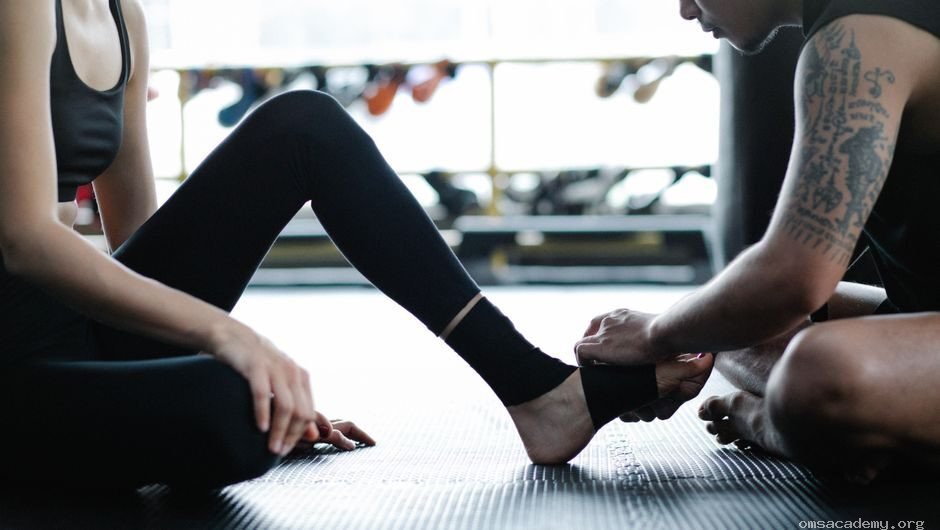
Your foot is the foundation of every technique you throw. If your ankles are weak, your kicks will never reach their full potential. I have seen thousands of students over my 32 years of teaching here in Jaipur, and the ones who struggle with balance almost always have weak calves and unstable ankles.
Think of your standing leg as a root. If the ground under that root is shaky, the tree will fall. Single-leg stability drills are non-negotiable if you want to avoid injury and land kicks at head height with total control. When you stand on one leg, you force your stabilizing muscles to fire, which is the best insurance policy against a rolled ankle during a tournament.
| Exercise | Focus Area | Taekwondo Benefit |
|---|---|---|
| Single-Leg Calf Raises | Ankle Stability | Maintains base during high kicks |
| Glute Bridges | Hip Extension | Increases snap and speed of kicks |
| Bird-Dogs | Core/Balance | Prevents leaning during chambering |
Building Your Engine
You need to prioritize hip flexor and glute activation. If your glutes are “asleep” from sitting in a chair all day, your kicks will lack the power that comes from the posterior chain. I often tell my students to stop looking for shortcuts. Discipline over motivation—that is our philosophy at the studio. You don’t need to feel like training to get the work done.
Do you want to be the person who relies on lucky strikes, or the one who builds a foundation so solid that your opponent feels the pressure before you even move? Why not start your next workout by holding a single-leg balance for sixty seconds on each side before you even think about throwing a kick? Can you hold that position without your standing foot wobbling, or are you still fighting your own body?
Comparing Home Drills vs. Professional Academy Training
Last Tuesday, a white belt asked me if he could skip the academy and just learn his kicks from YouTube videos at home. I looked at his stance, saw his knees collapsing inward, and realized he was asking the wrong question. He wasn’t looking for convenience; he was looking for a shortcut. After thirty-two years on the mat and training over 25,000 students here in Jaipur, I can tell you that your living room is a laboratory, but this studio is the factory.
You can absolutely perfect your chamber, your balance, and your basic mechanics at home. In fact, if you aren’t drilling those foundations solo, you are wasting our time on the mat. But don’t fool yourself into thinking you are learning how to fight by shadowboxing against a wall. You cannot replicate the pressure of a live opponent in your bedroom. You can’t simulate the split-second timing required to counter a roundhouse kick when your “opponent” is a coat rack.
The Feedback Loop
If you train at home without eyes on you, you are practicing your mistakes. You need a feedback loop. When I was younger, I made the mistake of thinking I could fix my own form by sheer willpower. I was wrong. I spent months reinforcing a bad habit because I didn’t see my own heel dropping.
Do this tonight: set up your phone and record yourself doing ten side kicks. Don’t watch them live. Watch the playback. Look for the flaws I point out in class—the drifting hands, the lazy retraction. If you aren’t filming your sessions, you are flying blind.
Academy vs. Home: Know the Difference
Think of your training like a building project. Home drills are your bricks; the academy is the mortar.
| Skill Type | Primary Location | Why? |
|---|---|---|
| Fundamental Mechanics | Home | Repetition builds muscle memory. |
| Timing & Distance | Academy | Requires a living, breathing partner. |
| Strength & Flexibility | Home | Consistency beats intensity here. |
| Live Sparring | Academy | Safety and technical correction. |
I see students who think they can “master” martial arts through online training alone. Coaches like Micah B. have discussed this at length, and the reality is simple: you can gain knowledge, but you cannot gain wisdom without a teacher to stress-test your movements. A video won’t tell you that your weight distribution is off when you get hit. I will.
For optimal progress, I recommend a ratio of three hours of solo drilling for every one hour of supervised academy training. If you put in the work on your own time, the class becomes a place to refine rather than a place to start from scratch.
Here is some tough love: if your current coach isn’t correcting your specific technical errors—if they just let you kick the air without adjusting your hip rotation—you aren’t growing. You’re just sweating. True discipline is recognizing when your own form is slipping and having the humility to let someone else fix it.
I’ve watched thousands of students pass through these doors. The ones who succeed aren’t the most talented; they are the ones who treat their home practice as a sacred duty to their future self.
Are you actually practicing your drills at home, or are you just going through the motions until your next class? Show me your recorded footage tomorrow, and let’s see if you’re really training or just playing.
Final Thoughts
Last week, a student sat on the edge of the mat, exhausted after a session, and asked me if training at home really matters when the real work happens here under my watch. I told him the truth: your living room is where you prove to yourself that you actually care. If you only train when I am standing over you, you are chasing motivation. If you train in your bedroom while the world is quiet, you are building discipline. That is the difference between a hobbyist and a martial artist.
I have spent 32 years on the mat, and I still catch myself checking my stance in the mirror before I brush my teeth. It is not because I am obsessed; it is because excellence is a habit. You will make mistakes. You will lose your balance during a roundhouse kick, or your legs will burn during a squat set. Good. That means you are doing it right. Keep pushing through the discomfort, because that is where the growth hides.
Before you close your laptop, remember these non-negotiables for your home practice:
- Own your space: Your foundation starts with your stance. If your feet are wrong, your power is non-existent. Check your alignment daily.
- Consistency beats intensity: Ten minutes of focused, slow-motion kicks are better than an hour of sloppy, half-hearted movement.
- Conditioning is character: Your legs are your engine. Treat them with the respect they deserve by staying committed to your strength drills.
You have the blueprint now. The only thing left is to put your shoes on and clear a space on your floor. If you find yourself hitting a wall or needing that expert eye to refine your technique, come see us at Om’s Martial Arts & Fitness Studio in Jaipur. We have helped thousands of students sharpen their focus, and we have plenty of room for you on the mat. Are you going to be the person who waits for the perfect moment, or are you going to be the person who creates it tonight?
You Might Also Like

→
→

→

→
→