
Introduction: Why the History of Taekwondo Matters
Every time a student steps onto the dojang floor at Om’s Academy in Jaipur, they are not just learning kicks and punches. They are becoming part of a tradition that stretches back over two thousand years, through ancient Korean kingdoms, foreign occupations, and a relentless journey to the world’s biggest sporting stage. Understanding this history is not an academic exercise. It is essential knowledge for anyone who practices Taekwondo, because the art you train in today carries the weight, philosophy, and spirit of every generation that preserved it before you.
The word Taekwondo itself tells the story. Broken down from its Korean roots, Tae (tae, 塜) means foot or to strike with the foot, Kwon (权, gwon) means fist or to strike with the hand, and Do (道, do) means the way or the path. Together, Taekwondo (taekwondo, 跼拳道) translates roughly to the way of the foot and the fist. But it is far more than a combat system. It is a discipline, a philosophy, and for millions of practitioners around the world, it is a way of life that teaches respect, perseverance, and self-control alongside physical technique.
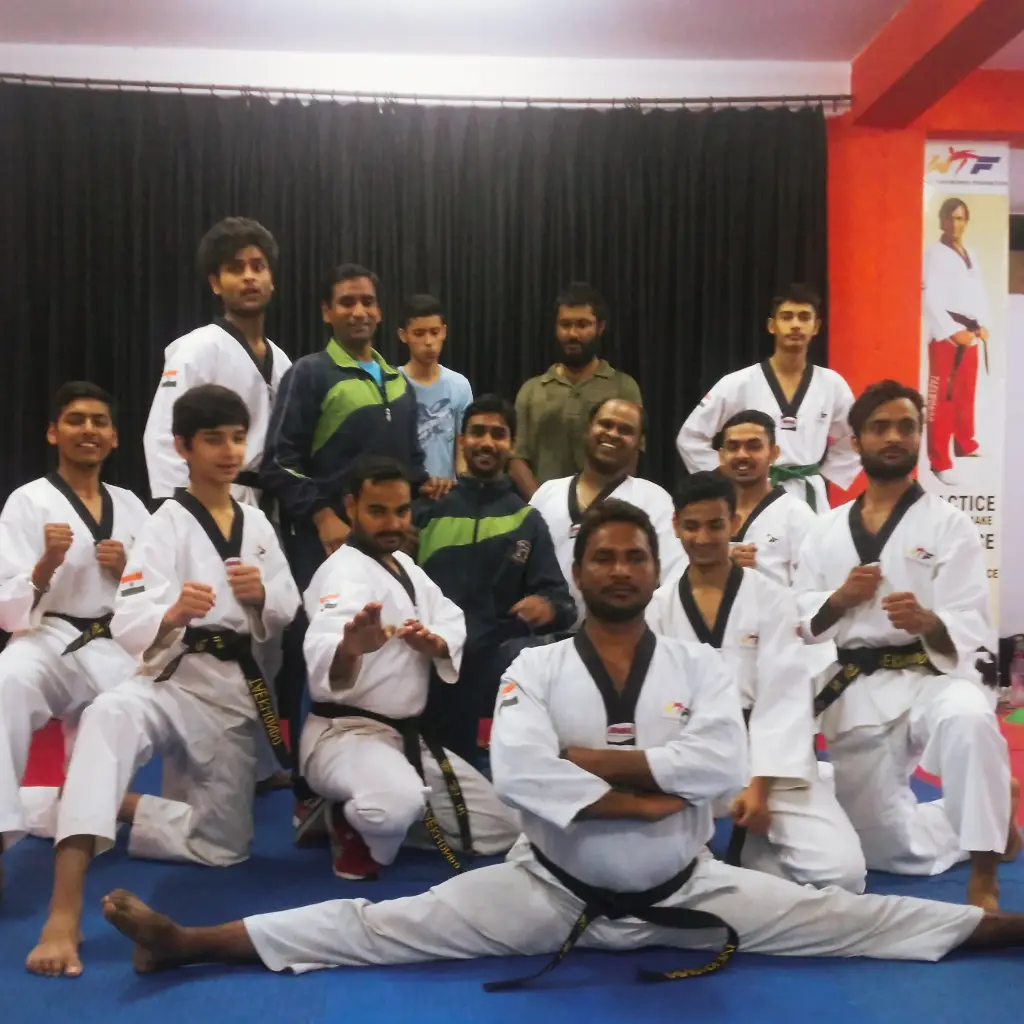
At Om’s Academy, we follow the World Taekwondo (WT) curriculum, which is the same governing body that oversees Olympic Taekwondo competition. This article traces the complete arc of Taekwondo’s evolution, from its earliest origins among ancient Korean warriors to its current status as an official Olympic sport practised in over 213 countries. Whether you are a beginner who just tied your first white dobok or an advanced student preparing for dan (black belt) promotion, this knowledge will deepen your connection to the art you are training in every single day.
Part 1: Ancient Korean Roots — Where It All Began
The Three Kingdoms Period (57 BCE – 668 CE)
The earliest evidence of structured martial arts practice on the Korean Peninsula dates back to the Three Kingdoms period, when the region was divided among Goguryeo (37 BCE – 668 CE), Baekje (18 BCE – 660 CE), and Silla (57 BCE – 935 CE). These kingdoms existed in near-constant military rivalry, which created a natural environment for the development of sophisticated unarmed and armed combat systems. The people of these kingdoms did not practice martial arts as a sport or fitness activity as we understand it today. For them, combat training was a matter of survival, national defense, and military readiness.
The most compelling archaeological evidence comes from Goguryeo tomb murals. Two royal tombs in particular, the Muyongchong (Tomb of the Dancer) and the Ssangnyong Tomb (Tomb of the Twin Dragons), both located in present-day Jilin Province, China, contain wall paintings dating from the 4th to 6th centuries CE. These murals clearly depict figures in fighting stances, practicing what appears to be unarmed combat, sparring, and weapon drills. The Muyongchong mural, for instance, shows two men facing each other in poses that strongly resemble modern Taekwondo stances, with one figure appearing to deliver a kick. These are not vague or interpretive images. They are detailed, deliberate depictions of martial training, and they prove that the Korean Peninsula had developed structured fighting arts well over 1,500 years ago.
Subak and Taekkyeon: The Ancestor Arts
During the Three Kingdoms era and continuing into later periods, two primary unarmed combat systems were practised across the Korean Peninsula: Subak (subak, 手博) and Taekkyeon (taekgyeon, 踏拳). Subak was a hand-striking and grappling art that was widely practised among military personnel and, in some periods, among civilians as well. Historical records from the Goryeo dynasty (918–1392) describe Subak competitions being held at royal court events, suggesting that by this time, the art had developed both a military application and a spectator-friendly sporting dimension.
Taekkyeon, by contrast, emphasised fluid, sweeping footwork and kicking techniques, including tripping and sweeping motions designed to unbalance an opponent. Taekkyeon is widely considered the most direct ancestor of modern Taekwondo’s kicking techniques. While Subak focused more on hand strikes and close-range grappling, Taekkyeon developed the dynamic, leg-dominated movement patterns that would eventually become Taekwondo’s most distinctive characteristic. Both arts were practised in the Silla kingdom as well, where they became integral to the training of a unique military-social institution.
The Hwarang Warriors of Silla
Perhaps the most important cultural precursor to modern Taekwondo philosophy was the Hwarang (hwarang, 花郎), an elite warrior corps established in the Silla kingdom around the 6th century CE. The Hwarang were not merely soldiers. They were young aristocratic men selected for their physical ability, moral character, and intellectual potential. They lived together, trained together, and followed a strict code of conduct known as the Five Commandments of the Hwarang, given to them by the Buddhist monk Won Gwang. These five principles, which included loyalty to the king, filial piety, courage in battle, and the avoidance of unnecessary violence, form the philosophical backbone of what would eventually become the Taekwondo tenets taught in every dojang worldwide today, including at Om’s Academy.
The Hwarang trained intensively in unarmed combat, including early forms of Subak and Taekkyeon, alongside archery, swordsmanship, and horseback riding. Their influence on Korean culture was profound. Through their military campaigns, Silla eventually unified the Korean Peninsula in 668 CE, and the Hwarang tradition became a central element of Korean national identity. When modern Taekwondo was formalised in the 1950s, its founders deliberately drew on the Hwarang legacy to give the new art a deep cultural and philosophical foundation. The connection is not symbolic or marketing-driven. It is a genuine lineage of warrior values passed down through centuries of Korean history.
Part 2: The Japanese Occupation and the Struggle to Preserve Korean Martial Arts (1910–1945)
When Japan annexed Korea in 1910, it initiated a 35-year occupation that would profoundly reshape every aspect of Korean society, including its martial arts. The Japanese colonial government actively suppressed Korean cultural practices, including traditional martial arts like Taekkyeon and Subak. Koreans were forbidden from practising their indigenous fighting systems in public, and the Japanese instead promoted their own martial arts, primarily Judo, Kendo, and Karate, through the school system and military training programmes. The impact was devastating. By the end of the occupation, Taekkyeon had been driven to the brink of extinction, with only a handful of masters continuing to practise it in secret.
However, this period of suppression also sowed the seeds for what would eventually become modern Taekwondo. During the occupation, many young Korean men travelled to Japan for education or military service, where they were exposed to Japanese martial arts, particularly Shotokan Karate under Gichin Funakoshi and Shudokan-Ryu under Toyama Kanken. These Koreans learned Karate’s structured curriculum, belt ranking system, and training methodology. What is crucial to understand is that these future kwan founders did not simply copy Karate. They combined the technical framework they learned in Japan with the kicking traditions, movement patterns, and philosophical principles that survived from Korea’s own Subak and Taekkyeon heritage. The result was something new: a hybrid art that honoured both traditions.
Among the most significant figures to emerge from this period was Choi Hong-hi, a young Korean who studied Shotokan Karate in Japan, earned a 2nd dan black belt, and later claimed to have begun developing his own martial art system while imprisoned by the Japanese during World War II. Whether or not every detail of Choi’s account is historically verifiable, there is no dispute that the generation of Koreans who trained in Japanese martial arts during the occupation returned to a liberated Korea with both the technical knowledge and the nationalistic motivation to create a distinctly Korean martial art. The occupation had nearly destroyed Korea’s indigenous fighting traditions, but paradoxically, it also created the conditions for their rebirth in a modernised, unified form.
Part 3: The Birth of Modern Taekwondo (1945–1973)
The Nine Kwans: Korea’s Original Martial Arts Schools
Following Korea’s liberation from Japanese rule on August 15, 1945, martial arts schools known as kwans (kwan, 馆, meaning hall or institute) began to emerge across the country. These kwans were independent institutions, each led by a different founder with a different background, and each teaching a slightly different style of martial art. Between 1944 and 1953, nine principal kwans were established, and understanding these schools is essential because they are the direct ancestors of the Taekwondo practised at Om’s Academy and around the world today.
The first kwan was Songmookwan (Song Moo Kwan), founded in 1944 by Ro Byung-jik in Seoul. Ro had studied Shotokan Karate in Japan alongside Choi Hong-hi at the same university, and his school initially taught a Karate-based curriculum with Korean influences. The second was Chungdokwan (Chung Do Kwan), founded in 1945 by Lee Won-kuk, which quickly became the largest and most influential of the early kwans. Lee had also studied Shotokan in Japan and was granted permission to open his school by the Japanese authorities before liberation. Chungdokwan’s emphasis on powerful, linear techniques and rigorous discipline would significantly influence the development of modern Taekwondo’s sparring style.
The remaining kwans followed in quick succession: Kukmookwan founded by Kang Suh-chang, Moodukkwan founded by Hwang Kee (who had studied both Karate and Chinese Quanfa), Hanmookwan founded by Lee Chong-cho, Changmookwan founded by Yun Byung-in (who had studied Shudokan-Ryu under Toyama Kanken), Kangdukwan founded by Chul Hyun-chun and Hong Jong-pyo, Ohdokwan founded by Choi Hong-hi and Nam Tae-hi, and Jidokwan founded by Chun Sang-sup (which later merged with Yun Moo Kwan under Yoon Kweun-byung). Each kwan had its own distinctive emphasis. Moodukkwan, for example, incorporated more fluid, circular movements derived from Chinese martial arts, while Chungdokwan favoured the hard, linear style of Shotokan. What they all shared was a commitment to creating a Korean martial art that was distinct from Japanese Karate.
The Naming of Taekwondo: April 11, 1955
By the mid-1950s, it had become clear to many Korean martial arts leaders that the proliferation of kwans, each with a different name and curriculum, was creating confusion and fragmentation. A unified Korean martial art would carry far more cultural and political weight on the national and international stage. The movement toward unification culminated in a historic meeting on April 11, 1955, where a naming committee gathered to select a single name for the Korean martial art. Several names were proposed, including Tang Soo Do (the Korean pronunciation of the Chinese characters for Karate), Kong Soo Do, and Tae Soo Do.
According to the most widely accepted account, General Choi Hong-hi proposed the name Taekwondo, a term he claimed to have coined by combining the words Tae (foot technique), Kwon (fist technique), and Do (the way). While some historians, including Son Duk-sung of Chungdokwan, have contested Choi’s exclusive claim to the name, the term Taekwondo was ultimately adopted by the committee. The name was significant because it was linguistically and culturally Korean, unlike Tang Soo Do or Kong Soo Do, which used Chinese-derived characters. The selection of a uniquely Korean name was a deliberate act of cultural reclamation, signalling that this was not a copy of Japanese Karate but a distinct Korean art with its own identity and philosophy.
The Korea Taekwondo Association and Government Support
The formal organisation of Taekwondo progressed rapidly through the early 1960s. The Korea Taekwondo Association (KTA) was initially established in 1959, though internal disagreements between kwan leaders prevented it from functioning effectively. It was reorganised in 1961 under the leadership of General Choi Hong-hi, and later came under the strong influence of Kim Un-yong, a visionary sports administrator who would become the most important figure in Taekwondo’s international development. The Korean government, particularly under President Park Chung-hee, recognised Taekwondo’s potential as a tool for national identity and cultural diplomacy. President Park mandated Taekwondo training for all military personnel, which dramatically increased the number of practitioners and standardised training methods across the armed forces.
The military’s adoption of Taekwondo was transformative. Hundreds of thousands of Korean soldiers received systematic Taekwondo instruction, and many of these soldiers later became instructors, spreading the art across the country when they completed their service. The military also became a testing ground for new techniques, training methods, and competition rules. Many of the sparring and competition formats used in modern Olympic Taekwondo were first developed and refined within the Korean military training system. The synergy between the military and the KTA during this period was the single most important factor in Taekwondo’s rapid development from a collection of regional schools into a national martial art with standardised techniques and a unified curriculum.
Kukkiwon: The Spiritual and Technical Home of Taekwondo
The crowning achievement of the unification movement was the construction of Kukkiwon (gukgiwon, 国技院), the World Taekwondo Headquarters, located on a hillside in Gangnam-gu, Seoul. Construction began in 1971, funded largely by the Korea Taekwondo Association and private donations, and the building was officially inaugurated on February 6, 1973. Kukkiwon was designed to serve as the central authority for Taekwondo worldwide. It would define the official curriculum, set the standards for dan (dan, 段, black belt) and geup (geup, 级, coloured belt) promotion, develop the standardised forms known as poomsae (poomsae, 品势), and serve as the global centre for Taekwondo education and research.
On August 7, 1978, the leaders of all nine original kwans signed the Unification Proclamation at Kukkiwon, formally dissolving the independent kwan system and merging all schools under the Kukkiwon umbrella. This was a momentous event. After more than three decades of separate development, the nine kwans finally agreed to recognise a single set of standards, a single curriculum, and a single governing body. From this point forward, there was only one officially recognised system of Taekwondo, and Kukkiwon was its home. Today, every legitimate Taekwondo black belt certificate issued anywhere in the world is either directly from Kukkiwon or recognised by it. When students at Om’s Academy earn their dan rankings, they receive Kukkiwon certification, which is the international gold standard for Taekwondo credentials.
Part 4: Going Global — From Korean Dojang to the Olympic Stage
The Split: ITF vs. WTF — A Brief Note
Before tracing Taekwondo’s global journey, it is important to acknowledge a significant division that occurred within the Taekwondo community. In 1966, General Choi Hong-hi founded the International Taekwondo Federation (ITF) and began promoting Taekwondo internationally from his base initially in South Korea, and later from Vienna, Austria, and Toronto, Canada, after a political falling out with the South Korean government. In response, Kim Un-yong and the KTA established the World Taekwondo Federation (WTF) on May 28, 1973, the very same year Kukkiwon was inaugurated. The WTF was headquartered in Seoul and was recognised by the South Korean government and, crucially, by the International Olympic Committee.
The ITF and WTF developed different competition rules, different forms (the ITF uses tul patterns while the WTF uses Kukkiwon poomsae), and different sparring systems. The ITF allows hand techniques to the face, while WTF competition (the Olympic style) does not. This split is a source of genuine confusion for many students, and we will address it in a dedicated upcoming article in this series. For now, what you need to know is that Om’s Academy follows the WTF system, which is the pathway to Olympic competition and the most widely practised version of Taekwondo globally. The WTF was renamed simply World Taekwondo in 2017 to reflect its Olympic status, and it currently oversees competition rules for 215 national member associations.
The Road to the Olympics
Taekwondo’s journey to Olympic recognition was remarkably swift by the standards of international sport. The first major international demonstration took place at the 1966 Asian Games in Bangkok, and throughout the 1970s, Korean Taekwondo demonstration teams travelled the world, performing at military bases, universities, and sports events to showcase the art. The establishment of the WTF in 1973 provided the organisational infrastructure needed for international competition, and the First World Taekwondo Championships were held in Seoul in 1973, just weeks after the WTF’s founding, with 19 countries participating. By the time of the Second World Championships in 1975, participation had grown to 35 countries.
The breakthrough came in the 1980s. The 1988 Seoul Olympics offered a unique opportunity, as the host nation could introduce a demonstration sport, and Taekwondo was the natural choice. At the Seoul 1988 Games, Taekwondo appeared as a demonstration sport for the first time, with athletes from 35 countries competing. The response was overwhelmingly positive. Taekwondo returned as a demonstration sport at the 1992 Barcelona Olympics, and by this time, the International Olympic Committee was receiving strong support from national Olympic committees around the world to grant Taekwondo full medal status. The hard work of Kim Un-yong, who had become one of the most influential figures in international sports governance and an IOC member, was instrumental in this campaign.
On September 4, 1994, the IOC voted to include Taekwondo as an official medal sport, effective from the 2000 Sydney Olympics. This was a historic moment not just for Taekwondo but for martial arts in general, as Taekwondo became only the second Asian martial art after Judo to achieve full Olympic status. At Sydney 2000, Taekwondo featured eight weight classes (four men’s and four women’s) and athletes from 51 countries competed. Since then, Taekwondo has been a permanent fixture at every Summer Olympics, and the sport has continued to grow, with over 70 countries now competing for Olympic qualification spots through a rigorous international ranking and qualification system.
Taekwondo Today: A Global Phenomenon
As of 2026, World Taekwondo reports approximately 80 million practitioners in over 213 countries and territories, making it one of the most widely practised martial arts in human history. The sport features in every major multi-sport event, including the Asian Games, Pan American Games, African Games, and World Games. World Taekwondo has 215 recognised national member associations, each of which conducts its own national championships and sends athletes to World Championships and Olympic qualifying events. The competitive format, known as gyeorugi (gyeorugi, 格斗), is a full-contact sparring system where athletes wear electronic scoring sensors (hogu) and compete on a square mat, with points awarded for valid kicks and punches to permitted target areas.
Beyond competition, Taekwondo has become a global educational and fitness activity. Millions of children and adults train in Taekwondo dojangs worldwide, learning not just self-defence but also the core tenets of courtesy, integrity, perseverance, self-control, and indomitable spirit. The Kukkiwon poomsae system, which consists of standardised forms from Taegeuk (beginner level) through Dan-grade poomsae (black belt level), provides a structured progression that is consistent across every country. This standardisation is one of Taekwondo’s greatest strengths: a student who earns a blue belt in Jaipur at Om’s Academy can visit a dojang in Seoul, London, or New York and train at the same level, following the same curriculum and the same standards.
Part 5: India and Taekwondo at the Olympics
Taekwondo was introduced to India in the mid-1970s, primarily through the efforts of Master Puran Andrew Gurung and Jimmy R. Jagtiani, who are widely credited as the pioneers of the art in the country. The Taekwondo Federation of India (TFI) was established on August 2, 1976, and the sport has since grown to include 39 state-level affiliate associations across the country. India has produced numerous national champions, Asian Games competitors, and international medallists in various Taekwondo competitions, and the sport continues to expand in participation and recognition.
When it comes to Olympic representation, India’s journey in Taekwondo has been challenging. It is a notable reality that no Indian athlete has yet competed in able-bodied Olympic Taekwondo. The qualification pathway is extremely competitive, requiring athletes to achieve top placements at Asian or World qualification tournaments against athletes from traditional powerhouses such as South Korea, Iran, China, and Chinese Taipei. The gap in infrastructure, high-performance training facilities, and international exposure has historically made it difficult for Indian athletes to reach the qualification standard, though the situation has been steadily improving with greater investment in the sport at the national level.
In the Paralympic arena, however, India has made its mark. Aruna Tanwar became the first Indian Taekwondo athlete to compete at the Paralympic Games, representing India at the Tokyo 2020 Paralympics and again at the Paris 2024 Paralympics in the K44 classification. Aruna achieved a world ranking as high as World No. 4 in her category and won bronze medals at the 2022 Asian Para Games and the 2023 Asian Taekwondo Championships, among other international accomplishments. Her journey from Haryana to the Paralympic stage has been a source of immense inspiration for the Indian Taekwondo community and has significantly raised the profile of the sport within the country.
For students training at Om’s Academy and across India, the message is clear: the pathway to Olympic Taekwondo exists, and it runs through disciplined, consistent training under the WTF/Kukkiwon system. The sport’s growing popularity in India, combined with improving coaching standards and increasing government support, means that the dream of seeing an Indian athlete compete in Olympic Taekwondo is not a question of if, but when.
Part 6: Taekwondo in 2026 — What Makes It Timeless
Looking at Taekwondo in 2026, it is remarkable how an art that was formally named only in 1955 has grown to become one of the most recognised martial arts on the planet. Taekwondo today exists simultaneously as a traditional martial art with deep philosophical roots, a competitive Olympic sport with millions of fans, a fitness and self-defence system practised by people of all ages, and a global cultural phenomenon that appears in films, video games, and popular media. This multi-dimensional identity is part of what makes it so resilient and relevant.
The sport continues to evolve. World Taekwondo has introduced technological innovations such as electronic scoring systems, instant video replay (VAR), and enhanced protective equipment that have made competition fairer and safer. The poomsae (forms) discipline has gained its own World Championships and is growing as a separate competitive pathway, allowing athletes who specialise in patterns rather than sparring to compete at the highest level. Para-Taekwondo has been included in the Paralympic Games since Tokyo 2020, further expanding the sport’s reach and inclusivity. These developments ensure that Taekwondo remains a living, evolving art rather than a static historical relic.
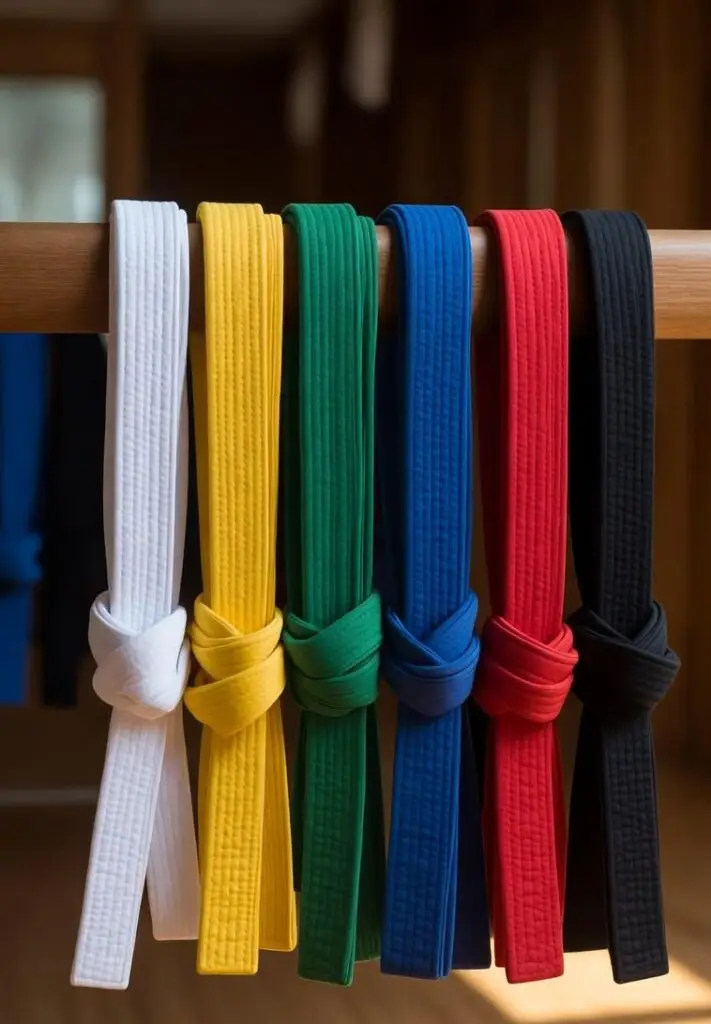
At its core, however, Taekwondo remains what it has always been: a path of personal development through martial discipline. The five tenets, the belt system that teaches patience and goal-setting, the respect shown to instructors and fellow students in every class, these elements have not changed since the days of the Hwarang warriors. Every time a student at Om’s Academy bows to their instructor and begins class, they are participating in a tradition that connects them to centuries of Korean martial arts heritage. The kicks may be faster, the competition rules may be more sophisticated, and the audience may be global, but the essential spirit of Taekwondo remains the same.
What Comes Next in This Series
This article is the first in a 27-article knowledge series from Om’s Academy, designed to be your comprehensive reference for martial arts education. Over the coming articles, we will explore every dimension of Taekwondo, Kickboxing, and MMA, from techniques and training methods to competition rules, belt systems, and practical benefits for daily life.
In the next article, we will dive deep into the benefits of Taekwondo, examining the physical, mental, and character-building advantages that make it one of the most complete martial arts for students of all ages. Whether you are a parent considering enrolling your child, a college student looking for fitness and discipline, or an adult seeking a practical self-defence system, the next article will give you a thorough understanding of what Taekwondo can do for you.
Until then, keep training, keep learning, and remember: in Taekwondo, every class is a step forward on the path. See you on the dojang floor.
Om’s Academy, Jaipur | Authorised Kukkiwon Curriculum | World Taekwondo (WT) Affiliated